




What's Happening?
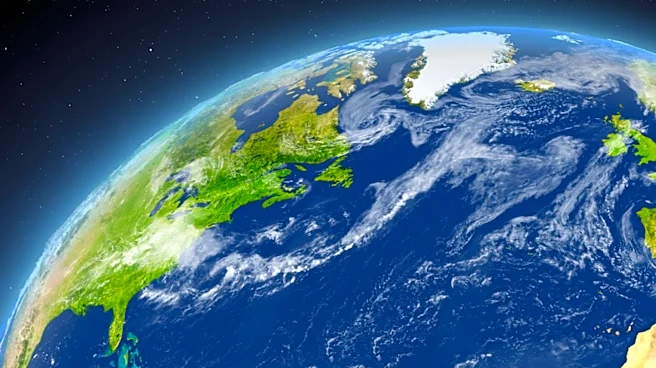
A recent study, published in the journal Communications Earth & Environment, reveals that desert dust from the Sahara is transporting microorganisms, specifically bacteria, across the Atlantic Ocean to the Amazon rainforest. Researchers from the University
of Graz, the Max Planck Institute for Chemistry in Mainz, and Brazilian institutions found that the bacterial composition of the air above the Amazon significantly changes when Saharan dust clouds arrive. While the fungal spore community remains largely stable due to the rainforest's own abundant spore release, the influx of Saharan dust introduces bacteria typically found in dry soils. The study also noted a tripling of endotoxin concentrations in the air following these dust intrusions, which are chemically stable compounds that can cause inflammation in humans.
Why It's Important?
This phenomenon has significant implications for the Amazonian ecosystem and potentially for human health. The introduction of foreign bacteria could alter the delicate microbial balance of the rainforest, potentially impacting soil health, nutrient cycles, and plant life. The increased concentration of endotoxins raises concerns about public health, as previous studies in the Caribbean have linked Saharan dust arrivals to a rise in asthma attacks. While a direct correlation in the Amazon is yet to be established, the findings suggest a potential environmental health risk for the region's inhabitants. This transcontinental transport of microorganisms highlights the interconnectedness of global ecosystems and atmospheric processes, demonstrating how events in one part of the world can have far-reaching biological consequences.
What's Next?
Future research will focus on clarifying the specific microorganisms present in the Saharan dust and investigating their viability after the long journey across the Atlantic. Scientists also plan to determine if there is a correlation between Saharan dust intrusions and respiratory health issues, such as asthma attacks, in the Amazon region, similar to observations in the Caribbean. These studies will involve further genetic analyses of collected samples and potentially long-term monitoring of air quality and public health data. Understanding the full impact of these microbial transfers is crucial for assessing potential ecological shifts and developing informed public health strategies in the Amazon.
Beyond the Headlines
The discovery of Saharan dust carrying bacteria to the Amazon reveals a complex and often unseen biological exchange occurring on a global scale. This natural phenomenon underscores the concept of 'atmospheric rivers' not just for water vapor, but also for microscopic life. The implications extend beyond immediate health concerns, touching upon the broader field of biogeography and the dispersal of species. It prompts questions about how such long-distance transport might contribute to the evolution of microbial communities, the spread of antibiotic resistance genes, or even the introduction of novel pathogens to new environments. This research highlights the need for a holistic understanding of Earth's systems, where atmospheric circulation, desertification, and rainforest health are intricately linked through the movement of microscopic organisms.