






What's Happening?
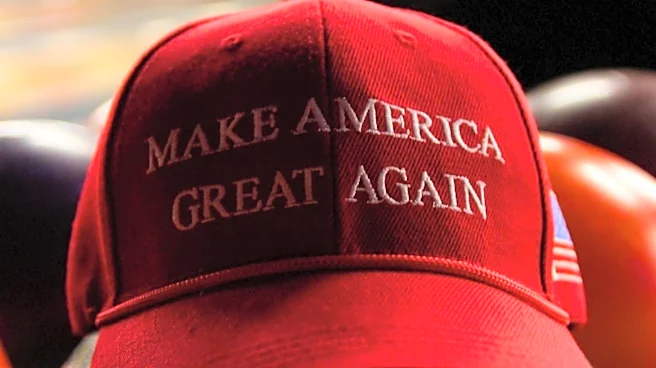
Andrew Kolvet, spokesperson for Turning Point USA and executive producer of “The Charlie Kirk Show,” recently appeared on The Chris Cuomo Project to engage in a comprehensive debate regarding the future trajectory of President Trump’s MAGA movement. The discussion
covered a wide array of topics, including the current state of the economy, immigration policies, the role of Islam and Christianity in America, the actions of ICE, and the rising influence of the Democratic Socialists of America (DSA) on the left. Kolvet emphasized the importance of addressing everyday economic concerns of voters, drawing parallels between a college student's complaint about a $20 burrito and broader national political arguments. He cautioned Republicans against dismissing voters' financial struggles, suggesting they risk repeating mistakes made by Democrats if they fail to acknowledge the economic realities faced by many Americans.
Why It's Important?
This discussion is significant as it provides insight into the ongoing internal debates and strategic considerations within the conservative movement, particularly concerning the future of President Trump’s MAGA agenda. Kolvet's perspective highlights a key challenge for Republicans: effectively addressing economic anxieties among the electorate. His argument that dismissing voters' concerns about the cost of living could be detrimental underscores the importance of economic policy in political messaging. Furthermore, the debate touches upon critical societal issues such as immigration and the role of religion, which are central to the cultural and political landscape of the United States. The comparison of the DSA's potential influence to MAGA's impact on the Republican Party suggests a recognition of evolving political dynamics and potential shifts in party structures.
What's Next?
The themes discussed by Andrew Kolvet and Chris Cuomo are likely to remain central to political discourse in the coming months. As the next election cycle approaches, both Republican and Democratic parties will continue to refine their economic messages to resonate with voters concerned about the cost of living. Debates surrounding immigration policies, the role of government agencies like ICE, and the influence of various ideological factions within both major parties are expected to intensify. The discussion also hints at potential internal power struggles and transformations within political parties, as movements like MAGA and the DSA seek to shape their respective platforms and influence the broader political agenda. Stakeholders will closely watch how these issues are addressed by political leaders and how they impact voter sentiment.
Beyond the Headlines
The conversation between Andrew Kolvet and Chris Cuomo delves into deeper implications concerning the evolution of political movements and voter engagement. Kolvet's emphasis on the 'everyday' economic struggles, exemplified by the 'burrito' anecdote, highlights a potential shift in political strategy towards more relatable, ground-level concerns rather than abstract policy debates. This approach suggests a recognition that voters often connect with issues that directly impact their daily lives. The discussion also implicitly touches upon the challenges of maintaining party unity and relevance in an increasingly polarized political environment, where both established parties face internal pressures from more ideologically driven factions. The comparison of MAGA and DSA's influence points to a broader trend of grassroots movements challenging traditional party establishments, potentially reshaping the future of American politics.