
What's Happening?
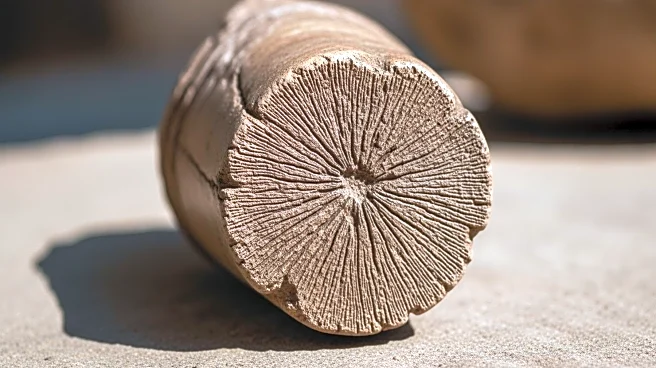
A recent study published in the Journal Peer has unveiled new insights into the growth and lifespan of the Tyrannosaurus rex. Researchers examined bones from 17 T. rex specimens using polarized light,
discovering additional growth rings that had previously gone unnoticed. These findings suggest that the T. rex grew more slowly and lived longer than previously thought, reaching its full size of approximately eight tons at around 35 to 40 years old, rather than the earlier estimate of 25 years. The study, led by Holly Woodward, indicates that the T. rex spent much of its life in a mid-body size range, with its growth influenced by environmental conditions and food availability.
Why It's Important?
This study challenges previous assumptions about the T. rex's growth and lifespan, providing a deeper understanding of its ecological role as an apex predator. By revealing that the T. rex grew slowly over decades, the research suggests that it occupied various food niches throughout its life, which may have contributed to its dominance as a carnivore. This new perspective on the T. rex's life history could influence future paleontological research and our understanding of dinosaur ecology and evolution.