







What's Happening?
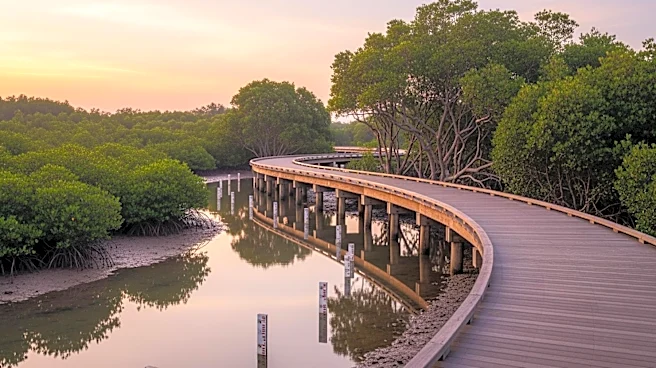
Miami's Bayshore Park, a 19.4-acre green space, has been developed as a response to the increasing climate challenges faced by coastal cities. Designed by Savino & Miller Design Studio, the park replaces a former golf course and serves as a multifunctional
area that includes nature immersion, playgrounds, and tennis courts. The park's design incorporates bioswales, native plantings, and varied topography to mimic the natural water absorption capabilities of wetlands. This infrastructure successfully managed millions of gallons of water during recent heavy rainfall, protecting nearby neighborhoods from flooding, a common issue in South Florida due to rising sea levels and frequent storms.
Why It's Important?
Bayshore Park represents a significant shift towards integrating nature-based solutions in urban planning to combat the effects of climate change. By absorbing stormwater and reducing urban heat, the park not only protects the community from flooding but also enhances the ecological and recreational value of the area. This approach highlights the potential for similar projects to be implemented in other coastal cities facing similar environmental challenges. The park serves as a model for sustainable urban design, emphasizing the importance of building infrastructure that works in harmony with natural ecosystems.
What's Next?
The success of Bayshore Park may inspire other cities to adopt similar nature-based infrastructure projects. As climate change continues to impact urban areas, there is likely to be increased investment in green spaces that offer both ecological benefits and community amenities. Stakeholders, including city planners and environmental groups, may advocate for more projects that prioritize sustainability and resilience. Monitoring the park's performance over time will provide valuable insights into the effectiveness of such designs in mitigating climate-related issues.
Beyond the Headlines
Beyond its immediate environmental benefits, Bayshore Park contributes to the cultural and social fabric of Miami. By providing a space for community engagement and recreation, the park fosters a sense of connection among residents. It also serves as an educational tool, demonstrating the importance of sustainable practices and the role of green infrastructure in urban resilience. The park's design challenges traditional urban planning paradigms, encouraging a shift towards more holistic and integrated approaches to city development.