




What's Happening?
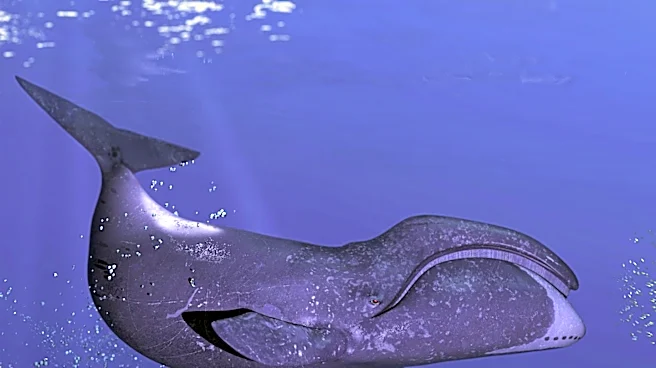
Scientists are expressing significant concern over the declining population of North Atlantic right whales, a critically endangered species. The latest population estimate for 2025 stands at 382 individuals, a 1.8 percent decrease from the 2024 estimate of 389.
This update comes from the North Atlantic Right Whale Consortium, which includes scientists from the New England Aquarium’s Anderson Cabot Center for Ocean Life and the National Oceanic and Atmospheric Administration (NOAA). In 2026, two right whale deaths have been detected, one due to entanglement in fishing gear and another from an unknown cause. Additionally, there have been eight documented human-caused injuries, including seven entanglements and one vessel strike. These incidents occur amidst legislative efforts, such as a Congressional bill, to extend a regulatory pause on additional whale protections until 2035, and proposed regulatory changes that would weaken the Endangered Species Act.
Why It's Important?
The continued decline of the North Atlantic right whale population is a critical environmental issue with significant implications for marine biodiversity and ecosystem health. The species' struggle highlights the ongoing impact of human activities, particularly fishing gear entanglements and vessel strikes, on endangered marine life. The proposed legislative and regulatory changes that could diminish whale protections are particularly concerning, as they threaten to undermine existing conservation efforts and further jeopardize the species' recovery. The lack of population growth, despite a relatively successful calving season with 24 calves born in 2025-2026, underscores that human-caused mortality and injury are preventing the population from rebounding. Protecting these whales is not only an ecological imperative but also reflects broader commitments to environmental stewardship and the preservation of marine ecosystems.
What's Next?
Scientists and conservationists are calling for more robust protective actions in both the U.S. and Canada to ensure the recovery of the North Atlantic right whale. The North Atlantic Right Whale Consortium will draft a comprehensive annual report following its meeting, detailing the status of the species, research activities, and recommendations for action, which will be available in early 2027. The focus will be on preventing human-caused deaths and injuries, particularly through addressing entanglements and vessel strikes. The ongoing legislative and regulatory debates regarding whale protections will determine the future policy landscape for conservation efforts. The scientific community emphasizes that the species cannot afford further delays in implementing adequate protections, as their survival depends on sustained and effective conservation measures.
Beyond the Headlines
The plight of the North Atlantic right whale extends beyond a single species, serving as a stark indicator of broader ocean health challenges. The legislative attempts to delay or weaken environmental protections for endangered species raise ethical questions about the balance between economic interests and conservation responsibilities. This situation highlights the complex interplay between policy, industry, and environmental science. The efforts to protect these whales often involve difficult trade-offs, such as modifying fishing practices or shipping routes, which can have economic impacts on certain industries. The ongoing struggle to protect the North Atlantic right whale underscores the need for a more integrated approach to ocean management that prioritizes long-term ecological sustainability while also considering the needs of human communities. It also brings to light the importance of international cooperation, as the whales migrate between U.S. and Canadian waters, requiring coordinated conservation strategies.