






What's Happening?
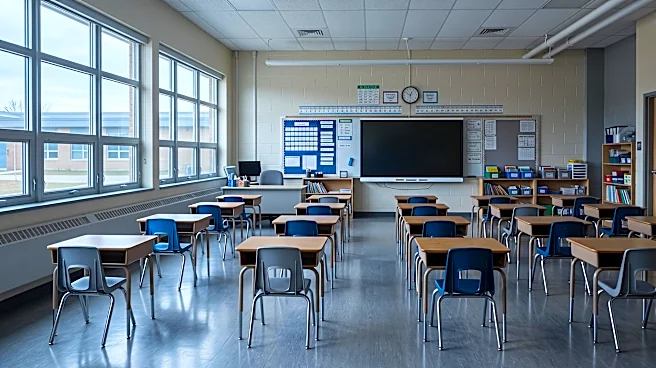
A 5-year-old student, Bellamy Dawkins-Morris, tragically died at Riviera Elementary School in Palm Bay, Florida, after a large digital whiteboard, known as a Promethean board, fell on him. The incident occurred on a Wednesday morning, and despite immediate
emergency medical care, the child succumbed to his injuries at a local hospital. The Brevard County Schools district has stated that these boards are installed by a licensed third-party vendor according to manufacturer guidelines. Following the tragedy, the district is inspecting all similar Smartboard-style displays across its schools. The family of Bellamy, who was on the autism spectrum, is grieving and considering legal action, expressing a desire for justice and questioning the level of supervision and safety protocols in place.
Why It's Important?
This tragic incident highlights critical safety concerns within U.S. schools, particularly regarding the installation and maintenance of heavy classroom equipment. The death of a young child due to a falling digital whiteboard underscores the potential for severe consequences when safety protocols are not rigorously followed or when equipment installation is faulty. This event will likely prompt school districts nationwide to re-evaluate their safety procedures, equipment installation standards, and maintenance schedules for all wall-mounted devices. It also raises questions about the adequacy of supervision in classrooms and the specific needs of students with disabilities, such as those on the autism spectrum, who may require additional attention. For parents, this incident amplifies anxieties about the safety of their children in school environments, potentially leading to increased demands for transparency and accountability from educational institutions.
What's Next?
Brevard County Schools will continue its inspection of all Smartboard-style displays across its facilities to prevent similar incidents. The family of Bellamy Dawkins-Morris is actively considering legal action, which could lead to a lawsuit against the school district, the equipment manufacturer, or the installation vendor. This legal process will likely seek to determine liability and establish accountability for the tragedy. The incident may also trigger broader investigations by state and federal safety agencies into school equipment safety standards. It is probable that school districts across the U.S. will review and potentially revise their policies for installing and securing classroom technology, as well as their emergency response protocols. There may also be increased advocacy for enhanced safety measures and supervision, particularly for vulnerable student populations.
Beyond the Headlines
The death of Bellamy Dawkins-Morris extends beyond a singular tragic accident to illuminate systemic issues within educational infrastructure and safety. It forces a critical examination of the balance between integrating modern technology into classrooms and ensuring the physical safety of students. The reliance on third-party vendors for installation, while common, raises questions about oversight and the enforcement of safety standards. Furthermore, the incident brings to the forefront the unique vulnerabilities of children with special needs in school settings and the imperative for tailored safety considerations. This event could catalyze a national conversation about school safety audits, the responsibility of equipment manufacturers, and the legal recourse available to families affected by such preventable tragedies. It underscores the profound impact of seemingly minor structural failures when they intersect with the lives of innocent children, demanding a re-evaluation of what constitutes a truly safe learning environment.