



What's Happening?
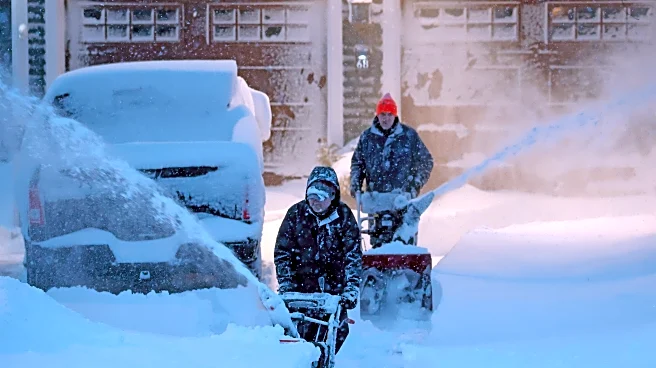
Rhode Island Governor Dan McKee announced the lifting of a travel ban at noon on Tuesday following a historic snowfall from a massive nor'easter. The storm, which hit on Monday, resulted in record-breaking snow accumulation, with T.F. Green Airport in Warwick
recording 37.9 inches. Despite the lifting of the ban, Governor McKee advised residents to remain at home if possible to allow road crews to continue clearing the snow. The state experienced the highest snowfall in the region, and mutual aid crews from other states are expected to assist in the cleanup efforts. The storm also led to at least one fatality, a 21-year-old Salve Regina student who died from carbon monoxide poisoning while charging his phone in his car.
Why It's Important?
The lifting of the travel ban marks a significant step in the recovery process following one of the most severe snowstorms in Rhode Island's history. The storm's impact on infrastructure and daily life underscores the challenges faced by state and local governments in managing extreme weather events. The involvement of mutual aid crews highlights the collaborative efforts required to address such emergencies. The fatality reported serves as a tragic reminder of the dangers associated with severe weather conditions, emphasizing the need for public awareness and safety measures. The economic implications include potential disruptions to businesses and services, as well as the costs associated with cleanup and recovery efforts.
What's Next?
As Rhode Island continues to dig out from the snow, the focus will be on ensuring roads are cleared and essential services are restored. The state will likely assess the storm's impact on infrastructure and consider measures to improve resilience against future weather events. Residents and businesses will need to adapt to any ongoing disruptions. The state government may also review emergency response protocols to enhance preparedness for similar situations. The involvement of mutual aid crews suggests a continued collaborative approach to disaster management, which could influence future policy decisions.