



What's Happening?
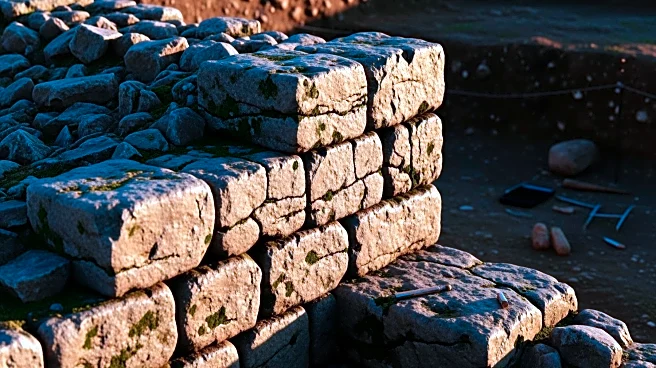
Archaeologists have completed the excavation of the longest continuous remains of an ancient wall that once encircled Jerusalem, dating back to the Hasmonean Kingdom era, which is associated with the Hanukkah story. This section of the wall, approximately
164 feet long and 16 feet wide, was likely constructed a few decades after the Hanukkah events by the same rulers. The wall's foundation was found under an abandoned wing of the Kishleh, a building initially constructed as a military base in 1830 and later used as a prison. The excavation, which began in 1999 but was halted due to regional violence, resumed two years ago and has now concluded. The discovery includes evidence suggesting a possible ceasefire agreement between Jewish king John Hyrcanus I and Hellenistic King Antiochus the Seventh, as described by ancient historian Flavius Josephus.
Why It's Important?
This archaeological discovery provides significant insights into the historical and cultural context of Jerusalem during the Hasmonean Kingdom. The intact section of the wall not only corroborates historical accounts of a ceasefire agreement but also offers a tangible connection to the Hanukkah story, a pivotal event in Jewish history. The findings enhance our understanding of the geopolitical dynamics of the era, highlighting the strategic importance of Jerusalem and the complex relationships between Jewish and Hellenistic rulers. This discovery is crucial for historians and archaeologists as it bridges the gap between historical texts and physical evidence, offering a more comprehensive view of the region's past.
What's Next?
The Tower of David Museum plans to incorporate the newly uncovered section of the Hasmonean wall into its exhibits. A floating glass floor will be installed over the ruins, allowing visitors to view the archaeological site as part of the museum's Schulich Wing of Archaeology, Art, and Innovation. This development is expected to take at least two years, providing a unique opportunity for educational and cultural engagement. The museum's efforts will likely attract scholars, tourists, and history enthusiasts, fostering a deeper appreciation for Jerusalem's rich historical tapestry.