






What's Happening?
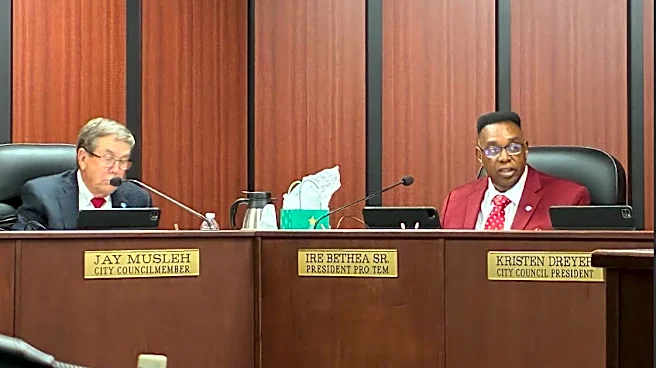
The Orleans Select Board has voted 3-2 against recommending $450,000 in additional capital funding for the community center at 44 Main St., despite agreeing to place the article on the November special town meeting warrant. The request aims to reinvigorate
stalled discussions about the future of the community center building. Board member Mark Mathison expressed reservations about the spending, citing anticipated millions of dollars needed for maintaining existing town buildings and facilities in the coming years. Another board member, Galligan, stated unease with the proposal moving forward with any hopes or intentions attached, specifically regarding housing, as he is no longer certain that is how the building should be developed. The decision to put the article on the warrant will allow voters to prioritize the community center project among other town capital needs, which Galligan believes will inform future conversations.
Why It's Important?
This decision highlights a common challenge faced by local governments in balancing community development aspirations with fiscal responsibility and competing infrastructure needs. The Orleans Select Board's split vote reflects differing priorities and concerns within the community regarding public spending and the future use of municipal assets. While some see the funding as a necessary step to advance a long-stalled project, others are wary of committing significant funds given other pressing capital improvement demands. The discussion around the community center's potential use, particularly the hesitation regarding housing, underscores broader debates about urban planning, affordable housing initiatives, and the evolving character of town centers. The outcome of the November special town meeting will indicate the community's collective priorities and could set a precedent for how similar projects are approached in the future, impacting local taxpayers and residents who rely on community facilities.
What's Next?
The article seeking $450,000 for the community center will be presented to voters at the November special town meeting. Despite the Select Board's non-recommendation, the voters will have the final say on whether to approve the funding. The outcome of this vote will provide a clearer indication of community priorities regarding the community center and other capital needs. If approved, the funding could lead to renewed planning and discussion about the building's future, potentially including its development for housing or other community uses. If rejected, the project's future may remain uncertain, potentially requiring the Select Board to explore alternative funding sources or revise plans for the property. The vote will also serve as a gauge of public sentiment on municipal spending and development strategies in Orleans.
Beyond the Headlines
The debate over the community center funding in Orleans reflects a deeper tension between preserving historical structures and adapting them for modern community needs, particularly in the context of housing shortages and evolving downtown areas. The mention of a new downtown zoning overlay district and sewering of the downtown area suggests a broader strategic vision for Orleans' urban core. The hesitation to commit to housing for the community center, despite the potential need, could indicate concerns about gentrification, property values, or the desire to maintain the building's original community-oriented purpose. This local decision-making process, where a board's recommendation is overridden by the need for voter input, highlights the democratic mechanisms in place for significant public expenditures and community development projects, emphasizing direct citizen participation in shaping their town's future.