






What's Happening?
A report by New York City Comptroller Mark Levine highlights persistent storefront vacancy rates in several NYC neighborhoods, despite a general recovery from pandemic-induced vacancies. The report, titled 'Who’s Minding the Storefront? An Analysis of
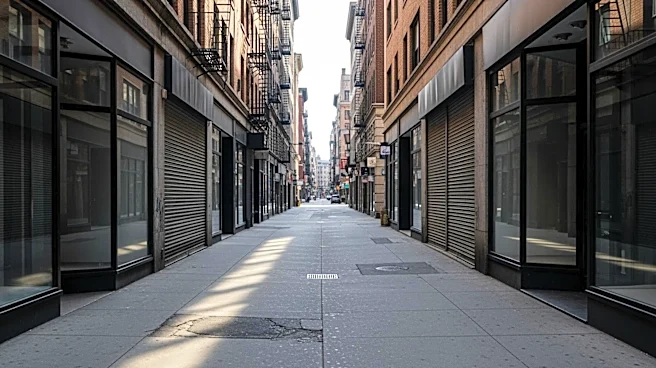
Storefront Vacancies,' reveals that while the citywide vacancy rate has improved to 11% as of April 2026, certain areas like Lower Manhattan, Battery Park City, and parts of Brooklyn and Queens still experience vacancy rates of 20% or higher. The report notes that many of these vacancies have persisted for over nine months, indicating a slow recovery in these areas. The analysis also shows that vacancies tend to cluster, with storefronts near vacant businesses more likely to remain unoccupied.
Why It's Important?
The high vacancy rates in specific NYC neighborhoods underscore ongoing challenges in the retail sector, particularly for small businesses. These vacancies can impact local economies by reducing foot traffic and diminishing neighborhood vibrancy. The report suggests that understanding the drivers and impacts of these vacancies is crucial for policymakers aiming to revitalize these areas. The persistence of vacancies in key neighborhoods could hinder economic recovery and growth, affecting local employment and community development. The report also highlights the need for targeted interventions to support small businesses and prevent further closures.
What's Next?
To address the uneven recovery, the report recommends that policymakers develop a comprehensive understanding of the factors contributing to storefront vacancies. Comptroller Levine has announced a partnership with the Hebrew Free Loan Society to provide $8 million in interest-free loans to small businesses, offering financial relief to entrepreneurs. This initiative aims to support low- and middle-income business owners, helping them avoid high-interest debt and predatory lending. Continued efforts to support small businesses and address vacancy issues will be critical in revitalizing affected neighborhoods and fostering economic growth.