



What's Happening?
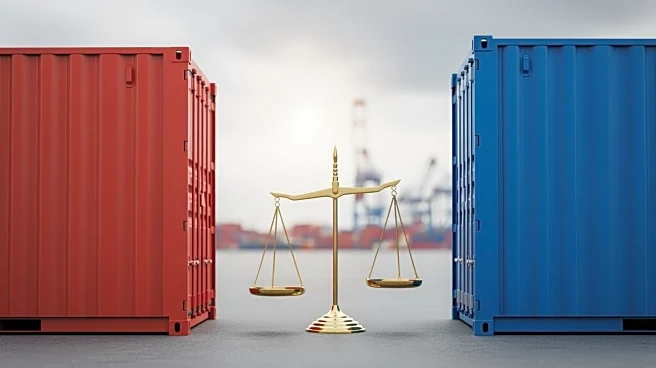
Kenya has postponed signing a trade agreement with China due to pressure from the United States. The delay comes as Kenya seeks to renew its participation in the African Growth and Opportunity Act (AGOA), which expired in September 2025. The lapse of
AGOA has resulted in tariffs of up to 28% on Kenyan apparel exports to the US, threatening over 66,000 jobs in the textile and agriculture sectors. The proposed China deal would have provided an alternative market for Kenyan exports by eliminating tariffs on tea, coffee, and avocados. However, the need to secure AGOA renewal has taken precedence.
Why It's Important?
The delay in the China trade deal highlights the significant impact of US trade policies on Kenya's economy. The expiration of AGOA and the resulting tariffs pose a substantial threat to Kenya's export-driven industries, particularly textiles and agriculture. The potential job losses could have severe economic and social consequences for Kenya. The proposed China deal offered a buffer against these challenges, but the need to maintain favorable trade relations with the US has taken priority. The situation underscores the complex dynamics of international trade and the influence of major economies like the US on smaller nations.
What's Next?
Kenya's focus will likely remain on securing the renewal of AGOA to restore duty-free access to the US market. The approval of the China trade deal is still pending and requires the consent of Kenya's cabinet, parliament, and President William Ruto. The outcome of these developments will significantly impact Kenya's trade strategy and economic stability. The US's stance on AGOA and its influence on Kenya's trade decisions will continue to be a critical factor in the coming months.