







What's Happening?
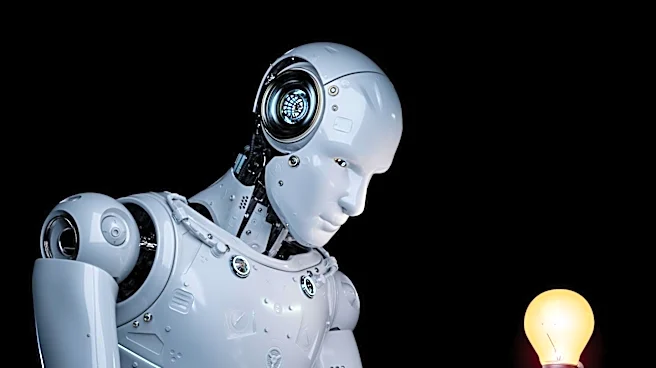
Meta has developed Max, its first humanoid robot prototype, in approximately three months through a partnership with Shanghai-based manufacturer Fourier Intelligence. Max stands about 1.5 meters tall, weighs around 48 kilograms, and runs on Nvidia's Jetson
Thor chip. This rapid development was achieved by leveraging Fourier's existing bipedal platform, allowing Meta to focus its engineering resources on the AI planning, perception, and motion-control software. The robot is intended to be the 'physical embodiment' of Meta's consumer AI agent, Muse, which launched on September 8, 2026, and is designed to take autonomous actions on a user's behalf. However, the partnership with a Chinese company raises national security concerns, as Fourier operates under Chinese laws that mandate cooperation with government intelligence requests. The U.S. Federal Communications Commission (FCC) expanded its Covered List on July 28, 2026, effectively banning the import and authorization of new Chinese-made humanoid robots in the United States due to surveillance risks and cybersecurity vulnerabilities. While Max is currently an internal research prototype and not for sale, its components and the collaboration with Fourier fall under scrutiny.
Why It's Important?
Meta's foray into humanoid robotics, particularly with a Chinese partner, has significant implications for both technological advancement and national security. The rapid development of Max demonstrates Meta's aggressive pursuit of embodied AI, aiming to extend the capabilities of its Muse AI agent into the physical world. This could revolutionize household tasks and personal assistance. However, the partnership with Fourier Intelligence introduces substantial risks due to Chinese intelligence laws, which could compel the company to share data collected by the robots with the Chinese government. This raises concerns about potential surveillance, data security, and the integrity of U.S. supply chains. The FCC's ban on Chinese-made humanoid robots underscores the U.S. government's apprehension regarding such technologies, highlighting a growing geopolitical tension in the AI and robotics sector. The situation forces a critical examination of international collaborations in sensitive technological domains.
What's Next?
Meta has stated that Max is a research prototype and not intended for sale, which currently provides regulatory breathing room from the FCC ban. However, if Meta ever commercializes a robot with Fourier-manufactured components for U.S. consumers, it would likely fall under the Covered List framework. Meta is already working on Max 2, a second-generation prototype with improved features like a redesigned torso, better hands, and stair-climbing sensors, indicating a long-term commitment to developing commercial-viable humanoid robots. The company's immediate goal is to build the intelligence stack necessary for future commercial robots. The ongoing geopolitical tensions and regulatory landscape will continue to shape Meta's robotics strategy, potentially pushing it towards developing domestic AI robotics capabilities to reduce supply-chain dependency on China.
Beyond the Headlines
The development of humanoid robots like Max, designed to perform household tasks, signals a future where AI agents are not just digital but also physical entities in our homes. This raises profound ethical and societal questions about the role of robots in daily life, privacy implications of data collection by domestic robots, and the potential for job displacement. The national security concerns highlighted by the U.S. government regarding Chinese-made robots underscore the critical need for robust regulatory frameworks and international agreements on AI and robotics development. The 'agent-first' approach taken by Meta, where an existing AI agent is given a physical body, could become a dominant paradigm in robotics, blurring the lines between software and hardware and creating new challenges for accountability and control in an increasingly autonomous world.