




What's Happening?
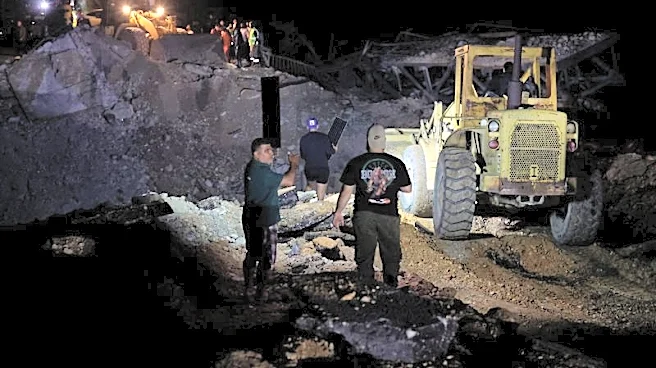
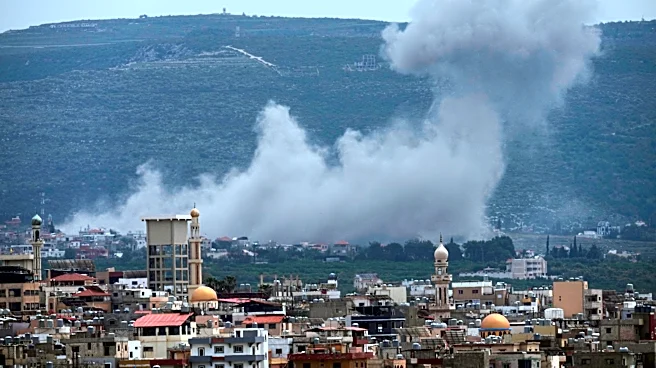
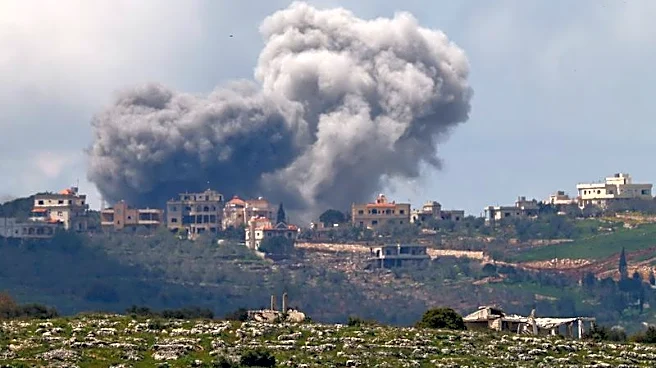
The Israeli Defense Forces (IDF) have announced their intention to continue military operations against Hezbollah fighters in southern Lebanon, despite a recently established ceasefire. This decision marks the first aggressive interpretation of the ceasefire by
a senior Israeli official. The IDF has committed to maintaining a presence in southern Lebanon indefinitely, using the Litani River as a new security line unless Hezbollah agrees to disarm. This stance comes amid ongoing Israeli-Lebanese negotiations, with the IDF expressing cautious optimism due to Hezbollah's weakened state following recent conflicts. The IDF has also revealed that the Israeli security cabinet and Prime Minister Netanyahu previously restrained them from launching major operations against Hezbollah, despite military frustrations.
Why It's Important?
The IDF's decision to remain in southern Lebanon has significant implications for regional stability and Israeli security policy. By establishing the Litani River as a security line, Israel aims to prevent future Hezbollah rocket attacks, which have historically posed a threat to northern Israel. This move could lead to prolonged military engagement in Lebanon, reminiscent of past conflicts that resulted in heavy casualties and political challenges for Israel. The ongoing presence of Israeli forces may also impact diplomatic relations with Lebanon and other regional actors, potentially influencing future peace negotiations. Additionally, Hezbollah's weakened state, partly due to Iran's economic struggles, may alter the balance of power in the region, affecting the strategic calculations of both Israel and its adversaries.
What's Next?
The IDF's continued operations in southern Lebanon are likely to provoke reactions from Hezbollah and other regional stakeholders. Hezbollah may seek to regroup and strengthen its capabilities, potentially leading to renewed hostilities. Meanwhile, Israel's security cabinet and Prime Minister Netanyahu will need to navigate the complex political landscape, balancing military objectives with diplomatic considerations. The international community may also play a role in mediating tensions, with potential implications for U.S. foreign policy in the Middle East. As negotiations continue, the situation remains fluid, with the potential for both escalation and resolution.
Beyond the Headlines
The IDF's actions in southern Lebanon raise broader questions about the ethics and legality of military interventions in foreign territories. The indefinite military presence could be seen as an occupation, drawing criticism from international human rights organizations. Additionally, the conflict highlights the ongoing challenges of addressing non-state actors like Hezbollah, which operate across national borders and complicate traditional military strategies. The situation also underscores the interconnectedness of regional conflicts, with Iran's economic woes indirectly affecting Hezbollah's capabilities and, by extension, the security dynamics in Lebanon and Israel.