
What's Happening?
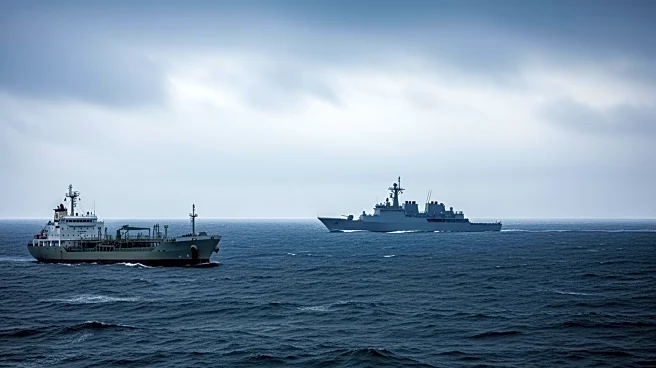
U.S. forces have captured a Russia-flagged tanker, the M/V Bella 1, in the North Atlantic following a dramatic pursuit that began near Venezuelan waters. This action marks a significant escalation in the U.S.'s
enforcement of its global blockade on sanctioned Venezuelan oil. The U.S. European Command confirmed the seizure, stating it was conducted under a warrant issued by a U.S. federal court. The operation concluded a weeks-long chase that started in late December when the tanker diverted from Venezuela to evade a U.S. quarantine. The tanker, which switched to a Russian flag and was renamed Marinera during its flight, had been sanctioned in 2024 for transporting oil for an entity linked to Hezbollah. The U.S. also seized another tanker, the M/T Sophia, in the Caribbean for illicit activities.
Why It's Important?
The seizure of the Bella 1 underscores the U.S.'s commitment to enforcing sanctions against Venezuela, particularly in cutting off oil revenues following the removal of President Nicolás Maduro. This incident highlights the geopolitical tensions between the U.S. and Russia, as Russia reportedly deployed naval assets to protect the tanker. The operation suggests a shift in U.S. sanctions enforcement from regulatory measures to active naval operations, potentially increasing geopolitical risks. The shipping market reacted with tanker stocks rallying due to expectations of tighter enforcement and higher freight risks. This development could lead to increased demand for compliant shipping routes and vessels, impacting global oil transportation dynamics.
What's Next?
The U.S. is likely to continue its aggressive stance on enforcing sanctions against Venezuela, potentially leading to further naval operations. The international community, particularly countries involved in oil trade with Venezuela, may need to reassess their shipping strategies to avoid similar confrontations. Russia's response to the seizure could further strain U.S.-Russia relations, especially if additional military assets are deployed in response. The situation may prompt discussions within international forums about the legality and implications of such enforcement actions on global trade and maritime law.