




What's Happening?
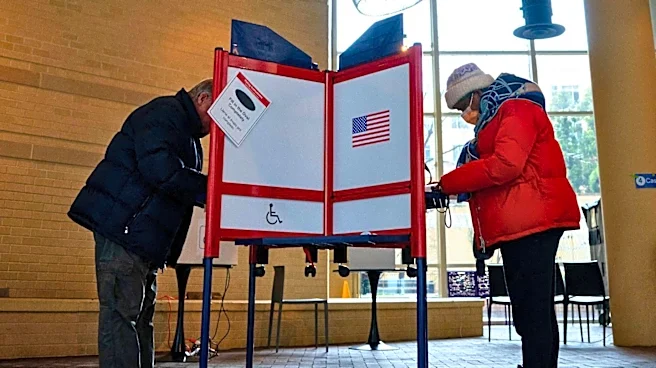
Amy Acton, a Democratic candidate for governor in Ohio, has publicly announced her support for Issue 3, a voter ID amendment set to appear on the November ballot. This stance places her at odds with the majority of her party, as every Democrat in the Ohio state
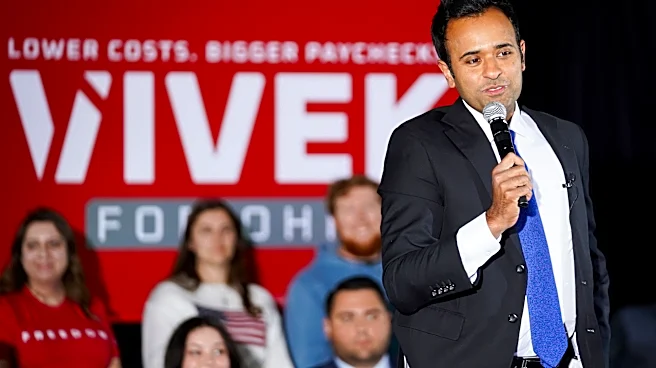
House and Senate who voted on the related Senate Joint Resolution 10 opposed it. Acton argues that the amendment, which would enshrine Ohio's photo ID requirement for in-person voting into the state constitution, has widespread support among Ohioans and does not alter existing law. Her position aligns her with her Republican opponent, Vivek Ramaswamy, who has also endorsed the amendment. The amendment aims to solidify the voter ID requirement, making it more challenging to repeal in the future.
Why It's Important?
Acton's support for the voter ID amendment highlights a significant division within the Democratic Party in Ohio. While Republicans argue that voter ID laws are common-sense measures with broad public support, Democrats contend that such laws create unnecessary barriers for certain voter demographics, including the poor, college students, and the elderly. Acton's position could influence her gubernatorial campaign, potentially attracting moderate voters who favor voter ID laws while alienating some Democratic constituents. The amendment's passage could have long-term implications for voting rights and election laws in Ohio, affecting voter turnout and access.
What's Next?
If approved by voters, Issue 3 would add the photo ID requirement to the Ohio constitution, making it more difficult to challenge or repeal. This could lead to legal battles if groups oppose the amendment's implications on voter access. The outcome of the November election will also determine whether Acton's stance helps or hinders her gubernatorial bid. The broader political climate and public opinion on voter ID laws will likely influence the amendment's fate and its impact on future elections in Ohio.