





What's Happening?
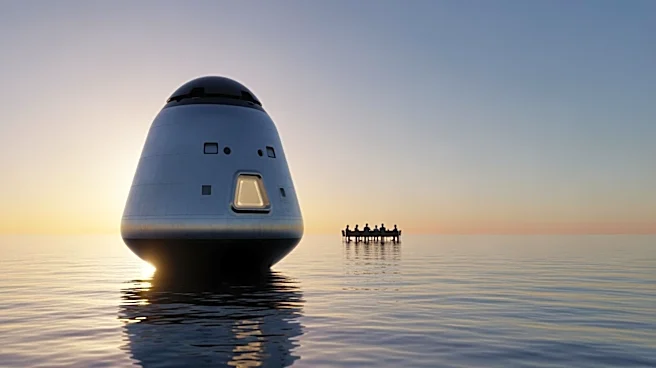
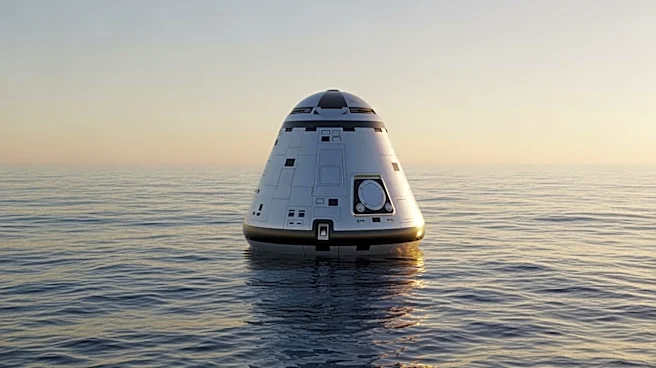
NASA's Artemis II mission has successfully concluded with the Orion capsule splashing down in the Pacific Ocean off the coast of San Diego. This marks a significant milestone in NASA's ongoing efforts to return humans to the moon. The mission, which involved
a crewed spacecraft, is part of NASA's broader Artemis program aimed at establishing a sustainable human presence on the moon by the end of the decade. The safe return of the Artemis II capsule is a critical step in testing the systems and capabilities needed for future lunar missions. The mission's success is expected to pave the way for Artemis III, which aims to land astronauts on the lunar surface.
Why It's Important?
The successful completion of the Artemis II mission is a pivotal moment for NASA and the future of space exploration. It demonstrates the viability of the technologies and systems that will be used in subsequent missions, including the planned Artemis III mission, which aims to land the first woman and the next man on the moon. This mission is crucial for advancing scientific knowledge, fostering international partnerships, and inspiring a new generation of explorers. The Artemis program also has significant implications for the U.S. space industry, potentially leading to technological innovations and economic opportunities as NASA collaborates with commercial partners.
What's Next?
Following the successful splashdown of Artemis II, NASA will conduct a thorough analysis of the mission data to refine and improve the systems for future missions. The next major milestone is the Artemis III mission, which is scheduled to land astronauts on the lunar surface. Preparations for this mission will involve extensive testing and development of the lunar lander and other critical components. NASA will also continue to engage with international and commercial partners to ensure the success of the Artemis program and its long-term goals of lunar exploration and eventual human missions to Mars.