






What's Happening?
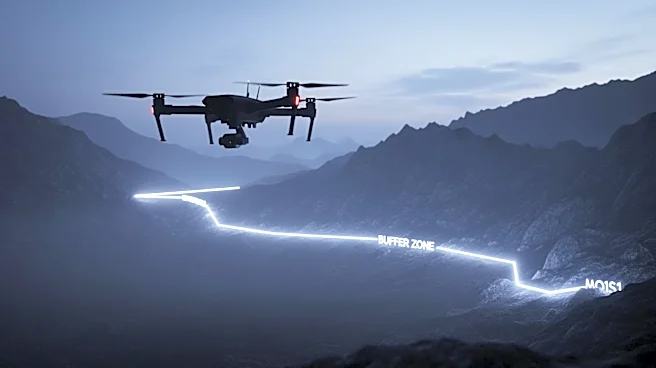
The Israeli Defense Forces (IDF) are currently engaged in operations in Lebanon with the aim of establishing a buffer zone to protect northern Israeli communities from Hezbollah. This strategy, however, is facing significant challenges due to Hezbollah's
growing use of drones. Historically, Israel's security zones in Lebanon have not been successful, as they often elevated Hezbollah's status as a resistance movement and led to increased rocket attacks on northern Israel. The current strategy aims to push Hezbollah away from the border, but the introduction of drones has complicated this effort. Drones, which are more lethal and harder to counter than traditional rockets, pose a new threat that could turn the buffer zone into a 'kill zone' for Israeli forces and civilians.
Why It's Important?
The situation is critical as it highlights the evolving nature of warfare and the challenges of defending against modern threats like drones. For Israel, the establishment of a buffer zone is intended to provide security for its northern communities. However, the effectiveness of this strategy is in question due to Hezbollah's ability to use drones to bypass traditional defenses. This development could lead to increased tensions and conflict in the region, affecting not only military strategies but also the political landscape. The use of drones by Hezbollah could force Israel to reconsider its defensive strategies and potentially escalate military actions, impacting regional stability.
What's Next?
Israel may need to shift its strategy from a defensive to an offensive posture to effectively counter Hezbollah's drone capabilities. This could involve more aggressive military campaigns aimed at dismantling Hezbollah's military infrastructure. The Israeli government will need to make strategic decisions on how to address the drone threat while maintaining security for its citizens. Additionally, there may be diplomatic efforts to engage with international partners to address the broader implications of drone warfare in the region.
Beyond the Headlines
The use of drones in warfare represents a significant shift in military tactics, with implications for international security and defense policies. As drones become more prevalent, countries will need to develop new technologies and strategies to counter these threats. The situation in Lebanon could serve as a case study for other nations facing similar challenges, highlighting the need for international cooperation in developing effective counter-drone measures.