
What's Happening?
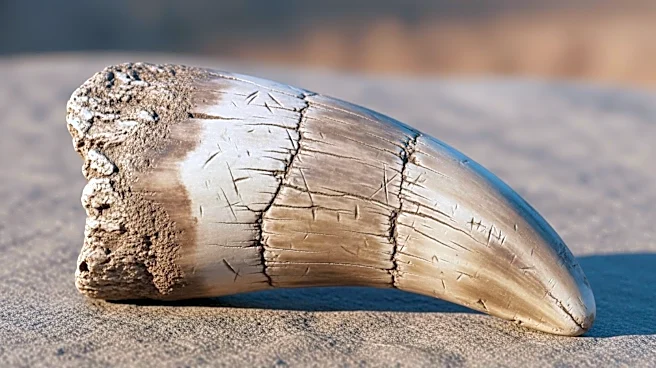
A study published in Current Biology has identified the oldest known group of Neanderthals in Central-Eastern Europe through DNA analysis of teeth found in Stajnia Cave, southern Poland. The research revealed
that at least seven different Neanderthals lived at the site, dating back to approximately 130,000 to 71,000 years ago. The study also found that some teeth shared identical mitochondrial DNA, indicating a common female ancestor or the same individual.
Why It's Important?
This discovery provides a coherent genetic picture of Neanderthals in Central-Eastern Europe, offering insights into their social structure and migration patterns. The findings challenge previous studies and highlight the importance of combining archaeological, radiocarbon dating, and genetic data to understand ancient human history. The research contributes to the broader understanding of Neanderthal populations and their interactions across Europe.
What's Next?
Further studies are needed to explore the genetic relationships between Neanderthals in different regions and their interactions with other hominin groups. The research underscores the need for more comprehensive genetic analyses to refine our understanding of Neanderthal history and evolution.