







What's Happening?
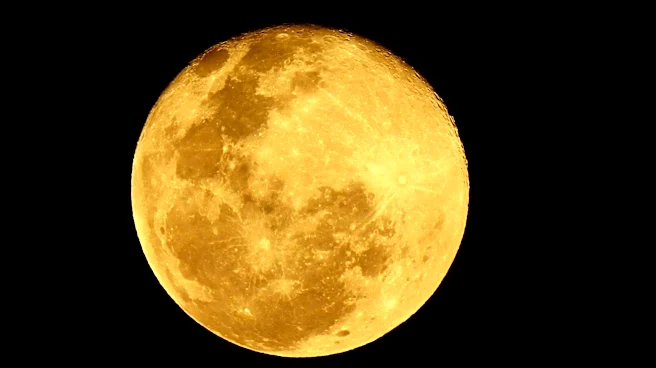
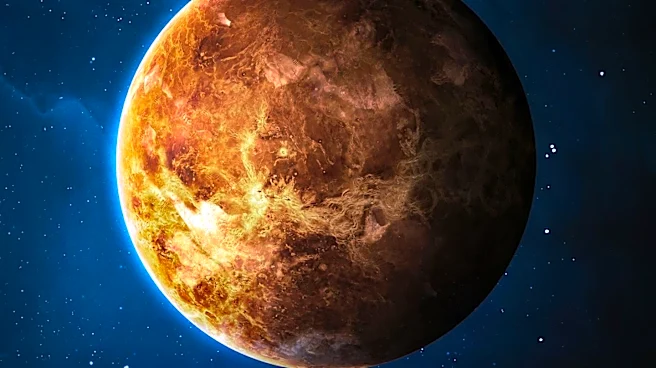
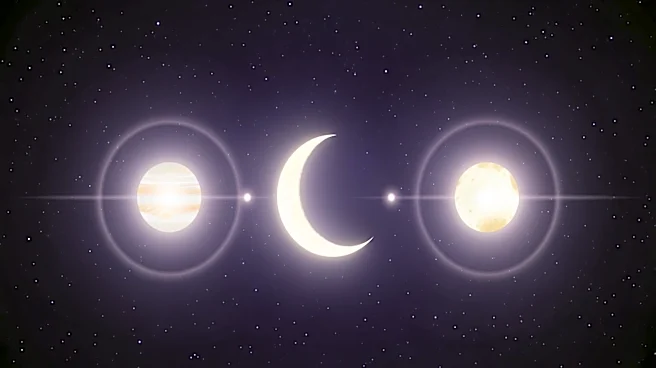
This week, skywatchers can enjoy a series of celestial events as the Moon aligns with bright planets Jupiter and Venus. The Moon will appear as a crescent, positioned between Jupiter and Venus, creating a striking visual in the evening sky. The alignment
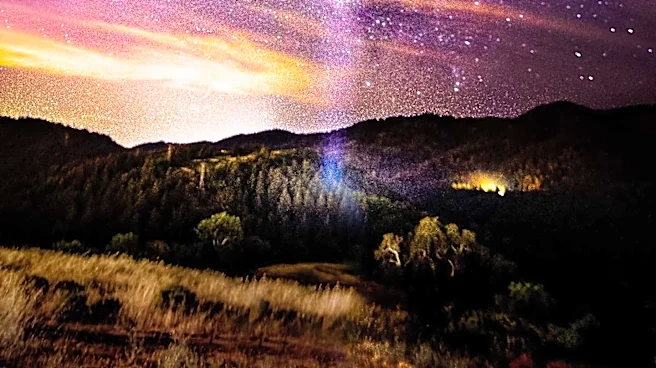
offers a unique opportunity for stargazers to observe these celestial bodies together. Additionally, the zodiacal light, a cone-shaped glow caused by sunlight scattering off dust in the solar system, will be visible in the western sky after sunset. The week also features the transit of Jupiter's moons, Ganymede and Europa, across the planet's disk.
Why It's Important?
These celestial events provide an excellent opportunity for both amateur and professional astronomers to observe and study the dynamics of our solar system. The alignment of the Moon with Jupiter and Venus offers a chance to appreciate the beauty and complexity of planetary movements. Observing the zodiacal light and the transit of Jupiter's moons can enhance public interest in astronomy and encourage educational activities related to space science. Such events also highlight the importance of preserving dark skies for astronomical observations, raising awareness about light pollution.
What's Next?
As the month progresses, Venus will continue its journey through the constellation Gemini, moving closer to Jupiter. This movement will culminate in a conjunction next month, providing another opportunity for skywatchers to observe the planets in close proximity. Astronomers and enthusiasts are encouraged to continue monitoring the night sky for these and other celestial phenomena, as they offer valuable insights into the workings of our solar system.