




What's Happening?
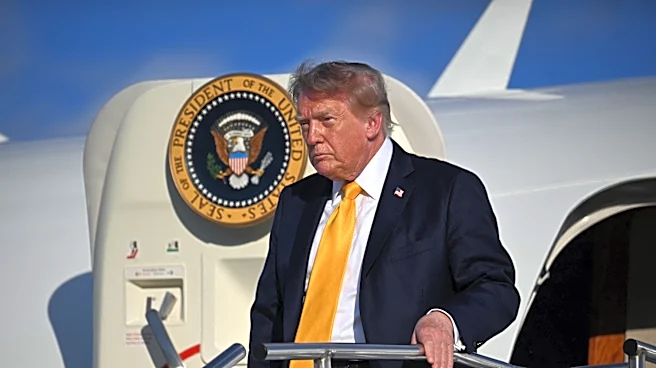
President Trump has indicated he would consider pardoning his former attorney and fixer, Michael Cohen. This development follows a recent public reconciliation between the two, despite Cohen's past testimony against President Trump in court and before
Congress, which led to Cohen being labeled a 'rat' by the President. President Trump stated, 'If everything is checking out, it’s something I would consider,' when asked about Cohen's appeal for presidential clemency. Cohen had previously submitted a pardon application to the White House after being denied by the Biden administration. While Cohen has not fully recanted his testimony, he has expressed a desire to move past his long-standing feud with President Trump, stating he 'felt pressured and coerced' into testifying. This consideration comes after President Trump joined Cohen's radio show last month, marking a significant shift in their relationship. Cohen pleaded guilty in 2018 to federal crimes, including facilitating a $130,000 hush payment to Stormy Daniels and lying under oath to Congress, serving over a year in prison. He was also a key witness in President Trump's 2024 criminal trial in New York, where President Trump was convicted on 34 counts of falsifying business records.
Why It's Important?
The potential pardon of Michael Cohen by President Trump carries significant implications for the U.S. political landscape and the perception of presidential pardon power. A pardon could nullify some of the federal consequences of Cohen's past convictions, potentially altering his legal standing and public image. This move also signals a strategic reconciliation between President Trump and a former critic whose testimony was central to legal challenges against him. For President Trump, pardoning Cohen could be seen as an attempt to consolidate support or neutralize a past adversary, especially as he appeals his New York conviction. Critics may view such a pardon as an abuse of presidential power, particularly given Cohen's role in legal proceedings against President Trump. Conversely, supporters might interpret it as an act of forgiveness or a recognition of Cohen's recent statements about feeling coerced. The situation highlights the discretionary nature of presidential pardons and their potential use in politically charged contexts, raising questions about accountability and the integrity of the justice system.
What's Next?
The immediate next step involves President Trump's evaluation of Cohen's pardon application. Should President Trump decide to grant the pardon, it would likely spark considerable debate and scrutiny from legal experts, political commentators, and the public. The timing of such a decision, especially in the context of President Trump's ongoing appeal of his New York conviction and his active role in the Republican party's midterm campaign, will be closely watched. Cohen's future role, whether in media or politics, could also be influenced by a pardon, potentially allowing him to re-engage in public life without the shadow of his federal convictions. Conversely, if the pardon is not granted, Cohen's legal status remains unchanged, and the reconciliation, while public, may not translate into tangible legal relief. The situation also sets a precedent for how former associates who have testified against a president might be treated, potentially influencing future political dynamics and legal strategies.
Beyond the Headlines
This potential pardon delves into deeper ethical and legal considerations surrounding the presidential pardon power. The reconciliation between President Trump and Cohen, following years of bitter public animosity and legal battles, raises questions about the nature of political alliances and the malleability of personal and professional relationships in high-stakes environments. Ethically, the act of pardoning someone whose testimony contributed to legal challenges against the pardoner can be perceived as a move to undermine judicial outcomes or reward loyalty, rather than solely serving justice. Legally, while presidential pardons are broad, their application in such a politically charged context can fuel debates about checks and balances and the potential for executive overreach. This scenario also highlights the psychological dimensions of public figures, where past grievances can be set aside for perceived strategic advantages. The long-term implications could include a re-evaluation of pardon guidelines or increased public demand for transparency in such decisions, shaping future discussions on executive authority and accountability.