
What's Happening?
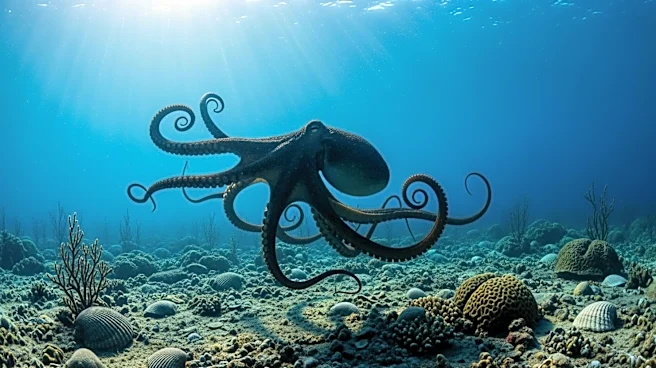
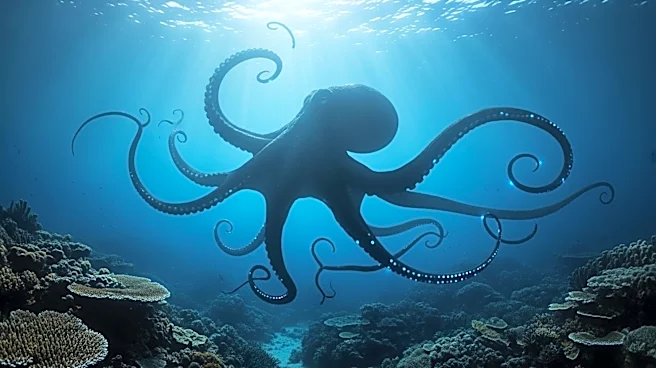
A new study published in the journal Science suggests that massive 'kraken-like' octopuses were among the top predators in the oceans during the age of dinosaurs, around 100 million years ago. These cephalopods,
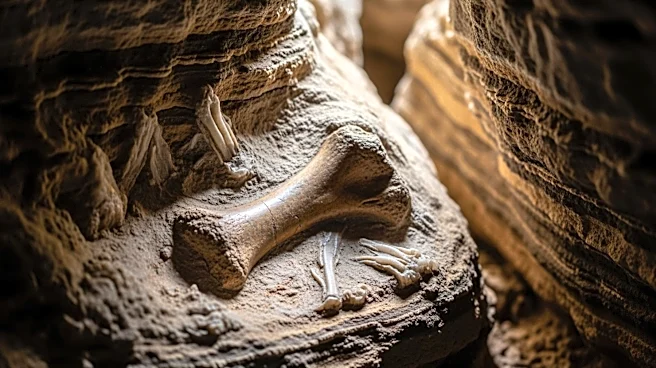
identified as Nanaimoteuthis, could reach lengths of over 60 feet, rivaling other marine predators like mosasaurs. The research, which analyzed fossilized jaws, indicates that these octopuses used their powerful beaks to crush hard prey, challenging the previous belief that vertebrates were the dominant predators of the time.
Why It's Important?
This discovery challenges the traditional view of ancient marine ecosystems, highlighting the significant role of invertebrates as apex predators. The findings suggest that these giant octopuses were more ecologically influential than previously thought, prompting a reevaluation of their evolutionary history and impact on marine biodiversity. The study also emphasizes the importance of cephalopods in ancient food webs, which were previously underestimated due to the rarity of fossilized soft-bodied organisms.
What's Next?
The research opens new avenues for paleontologists to explore the role of cephalopods in ancient ecosystems further. Future studies may focus on uncovering more fossil evidence to better understand the ecological dynamics of the Cretaceous period. Additionally, the use of advanced imaging techniques like digital fossil mining could reveal more about the behaviors and interactions of these ancient predators with other marine life.