



What's Happening?
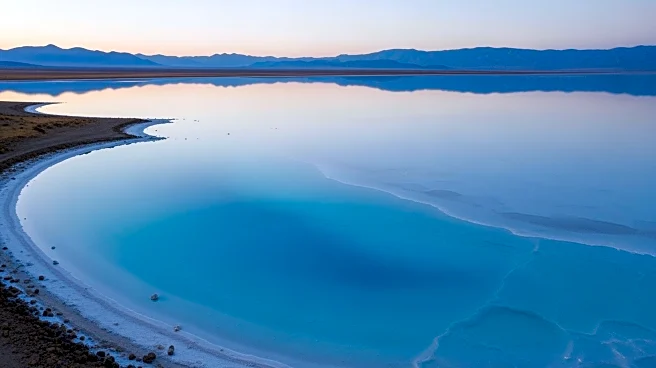
Researchers from the University of Utah have identified a significant freshwater reservoir beneath Farmington Bay of the Great Salt Lake using electromagnetic data from airborne surveys. This discovery, published in February, highlights the potential
to use this water source to mitigate dust pollution from the exposed lake bed, which has become a major environmental concern. The study, led by Michael Zhdanov, demonstrated the ability to detect freshwater beneath the lake's hypersaline surface, revealing that the water saturates sediments to depths of 10,000 to 13,000 feet. The reservoir is not a pure water mass but consists of porous rocks filled with fresh water. The research suggests that this water could be extracted to reduce dust pollution and possibly for irrigation purposes.
Why It's Important?
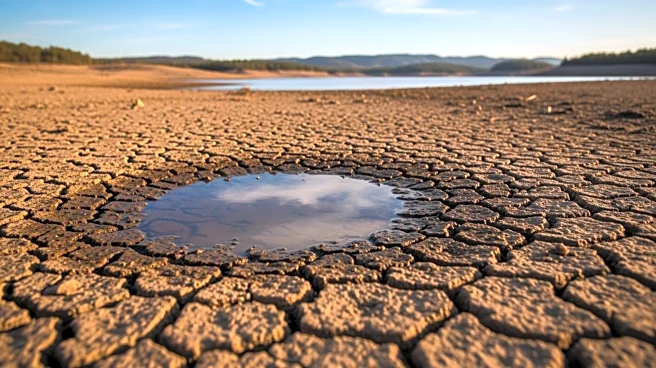
The discovery of a freshwater reservoir under the Great Salt Lake is significant due to its potential to address the growing issue of dust pollution affecting Utah's population centers. As the lake's water levels decline, the exposed lake bed becomes a source of toxic metal-laden dust, posing health risks to nearby communities. Utilizing the freshwater reservoir could help mitigate these effects by wetting dust hotspots, thus reducing airborne pollutants. This finding also opens up possibilities for regional water resource planning, offering a new approach to managing water scarcity in the area. The research underscores the importance of understanding subsurface groundwater distributions, which could have broader implications for water management in arid regions.
What's Next?
Further studies are needed to determine the feasibility and safety of extracting the artesian groundwater for dust mitigation. Researchers, including hydrologist Bill Johnson, emphasize the need to understand the potential impacts on the freshwater system before proceeding with extraction. Discussions with the Utah Legislature and the Department of Natural Resources are underway to secure funding for expanded studies. These efforts aim to cover a larger portion of the lake and potentially guide water resource planning across the region. The research team envisions conducting comprehensive surveys across the entire lake to better inform similar efforts worldwide.