









What's Happening?
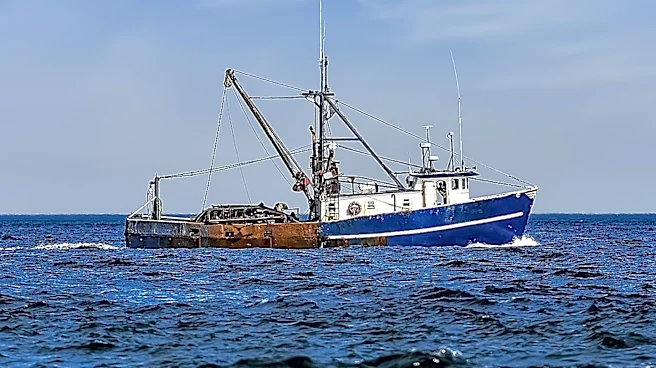
Russian fishing vessels are increasingly being suspected of engaging in espionage and sabotage activities in European waters, rather than solely fishing. Mariia Vladymyrova, a Copenhagen-based academic specializing in Russia's maritime activities and foreign
policy, indicates that while a precise number is difficult to ascertain, the presence of such vessels is on the rise. These concerns are amplified by observations of unusual 'navigational' and 'loitering' patterns, where vessels remain in areas for extended periods or deviate from typical fishing routes. News organizations have tracked these events, noting instances where fishing boats circle aimlessly or stay in waters known to have no fish. This behavior suggests activities beyond commercial fishing, raising alarms among European authorities and experts regarding potential intelligence gathering and threats to critical undersea infrastructure.
Why It's Important?
The suspected increase in Russian fishing vessels conducting espionage poses a significant threat to European security and critical infrastructure, including undersea cables and energy pipelines. These infrastructures are vital for communication and energy supply, with 95% of internet traffic relying on undersea cables. NATO's senior expert on cyber and hybrid threats, James Appathurai, describes these hybrid warfare activities as 'the most active threat' to Western infrastructure. The alleged actions go beyond traditional intelligence gathering, potentially involving damage to crucial subsea infrastructure, as seen in past cable-cutting incidents. This situation destabilizes European societies and necessitates a robust response to safeguard essential services and national security. The opaqueness of shadow fleet vessels, often operating with falsified ownership or re-flagged, complicates efforts to track and address these threats effectively.
What's Next?
European authorities are expected to continue and potentially intensify efforts to counter these suspected espionage activities. The European Union has already taken steps, such as banning Russian-flagged vessels from its ports and sanctioning specific fishing companies like Norebo JSC and Murman Sea Food for their alleged involvement in state-sponsored surveillance. Experts like Mariia Vladymyrova suggest that the EU should continue on this path by updating and expanding its list of sanctioned vessels and entities. Additionally, more meaningful interventions are anticipated at the national level, involving coast guards and police, as these agencies often have jurisdiction over maritime activities within their national laws. Addressing loopholes in ownership structures and insurance arrangements for shadow fleet vessels will be a critical next step to enhance traceability and accountability.
Beyond the Headlines
The ongoing concerns about Russian fishing vessels highlight a broader shift in geopolitical strategy, where maritime activities are increasingly becoming a covert battleground for hybrid warfare. This involves exploiting seemingly innocuous civilian operations, like fishing, for strategic military or intelligence objectives. The use of 'shadow fleets' and the deliberate obfuscation of vessel ownership and operations present complex legal and ethical challenges for international maritime law and surveillance. This situation underscores the vulnerability of modern interconnected infrastructure to non-conventional threats and the need for enhanced international cooperation in maritime security. The long-term implications could include a re-evaluation of maritime surveillance technologies, international agreements on fishing vessel transparency, and a heightened state of alert for critical infrastructure protection across Europe and potentially the U.S. as well.