






What's Happening?
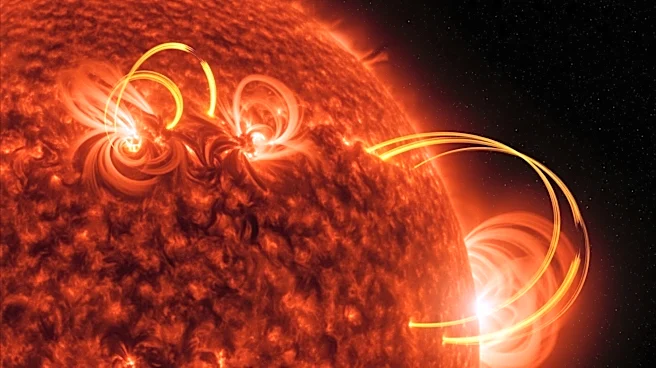
NASA has reported two significant solar flares, classified as X2.4 and X2.5, that occurred within a seven-hour period, causing radio blackouts across the Pacific and East Asia. These flares originated from sunspot region AR4419 and disrupted the ionosphere,
affecting shortwave radio communications used by pilots and sailors. The flares are part of the ongoing Solar Cycle 25, which has reached its peak intensity between 2024 and 2026. Scientists warn that the period of intense solar activity is not yet over, with the potential for more powerful flares in the coming years.
Why It's Important?
The recent solar flares highlight the vulnerability of modern infrastructure to space weather events. Disruptions to radio communications, GPS systems, and power grids can have significant economic and societal impacts. The potential for a solar superstorm, similar to the 1859 Carrington Event, poses a serious threat, with estimates suggesting it could cause up to $9 trillion in global damage. As reliance on technology and interconnected systems grows, the need for preparedness and resilience against such events becomes increasingly critical.
What's Next?
Agencies like NOAA and NASA continue to monitor solar activity to provide early warnings of potential disruptions. However, critics argue that current preparations are insufficient, particularly in terms of manufacturing and stockpiling high-voltage transformers, which are crucial for power grid recovery. As the solar cycle progresses, governments and industries may need to invest in more robust contingency plans and infrastructure improvements to mitigate the risks associated with severe solar storms.