






What's Happening?
On November 18, 2026, Ambassador Jamieson Greer, the United States Trade Representative, delivered virtual remarks at the Responsible Business Alliance’s Annual Conference held in San Jose, California. The conference brought together numerous Alliance members
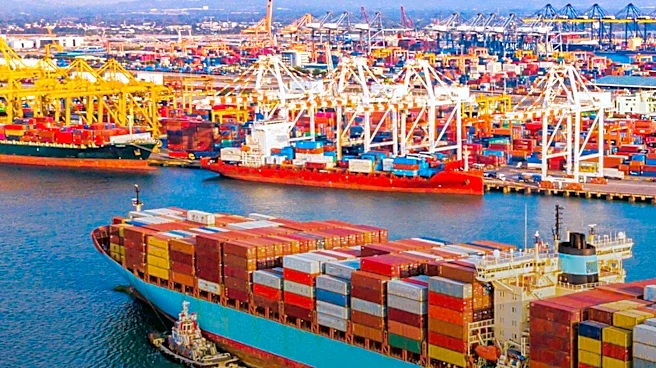
and representatives from various industries to discuss strategies for enhancing supply chain resilience and boosting global competitiveness for American workers and businesses. Ambassador Greer emphasized that his mandate as USTR is to advance a trade policy that prioritizes American workers and businesses. He further stated that a crucial component of this agenda is ensuring a level playing field for American workers and producers, highlighting the importance of labor issues within U.S. trade policy. His remarks underscored the administration's commitment to an 'America First' approach in international trade discussions and agreements, focusing on domestic economic benefits and fair competition.
Why It's Important?
Ambassador Greer's reaffirmation of an 'America First' trade policy signals continued emphasis on protecting domestic industries and jobs. This approach can significantly influence future trade negotiations, potentially leading to stricter enforcement of existing agreements and the pursuit of new ones that explicitly favor U.S. economic interests. For American businesses, this could mean increased protection from foreign competition and greater opportunities in global markets, provided they align with the policy's objectives. Conversely, international partners might face increased pressure to adjust their trade practices to meet U.S. demands, particularly concerning labor standards and fair competition. The focus on supply chain resilience also indicates a strategic shift towards reducing reliance on potentially unstable foreign sources, which could lead to more domestic manufacturing and sourcing, impacting global supply chains and international trade dynamics.
What's Next?
The USTR's continued focus on an 'America First' trade policy suggests that future trade negotiations and enforcement actions will likely prioritize the interests of American workers and businesses. This could manifest in several ways, including more rigorous enforcement of existing trade agreements, such as the USMCA, and the potential for new tariffs or trade barriers if other countries are perceived as not providing a level playing field. Businesses operating internationally should anticipate increased scrutiny of their supply chains and labor practices to ensure compliance with U.S. trade policy objectives. Furthermore, the emphasis on supply chain resilience may lead to government incentives or policies encouraging domestic production and diversification of sourcing, potentially reshaping global manufacturing and trade flows in the coming years.
Beyond the Headlines
The 'America First' trade policy, as championed by Ambassador Greer, extends beyond immediate economic benefits to encompass broader geopolitical and ethical considerations. By prioritizing American workers and businesses, the policy implicitly challenges the traditional globalized economic model, potentially leading to a more fragmented international trade landscape. The emphasis on labor issues within trade policy also highlights a growing concern for human rights and fair labor practices globally, suggesting that trade agreements may increasingly be used as tools to promote these values. This approach could lead to complex ethical dilemmas, as the U.S. balances its economic interests with its role in promoting global labor standards. The long-term implications could include a re-evaluation of international trade norms and a shift towards more regionally focused economic blocs, impacting global governance and international relations.