



What's Happening?
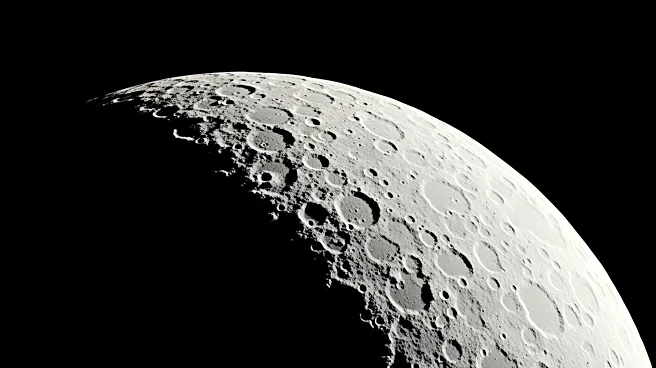
Astronomy enthusiasts are encouraged to explore three notable lunar craters during the first quarter moon. These craters, named after prominent astronomers and philosophers, include Eudoxus, Aristoteles, and Cassini. The Eudoxus Crater, located in the northeastern
quadrant of the moon, is named after the Greek astronomer Eudoxus of Cnidus. The Aristoteles Crater, situated near Mare Frigoris, honors the philosopher Aristotle. Lastly, the Cassini Crater, found near Mare Imbrium, is named after the astronomer Giovanni Domenico Cassini. These craters offer spectacular views through telescopes, with their features highlighted by the angle of sunlight during this lunar phase.
Why It's Important?
Observing lunar craters provides valuable insights into the moon's geological history and the impact events that have shaped its surface. These craters serve as natural records of the solar system's violent past, offering clues about the frequency and scale of impacts. For amateur astronomers and educators, these observations can enhance understanding of lunar geology and inspire interest in space science. Additionally, the study of lunar craters contributes to broader scientific knowledge, aiding in the planning of future lunar missions and the search for resources on the moon.