






What's Happening?
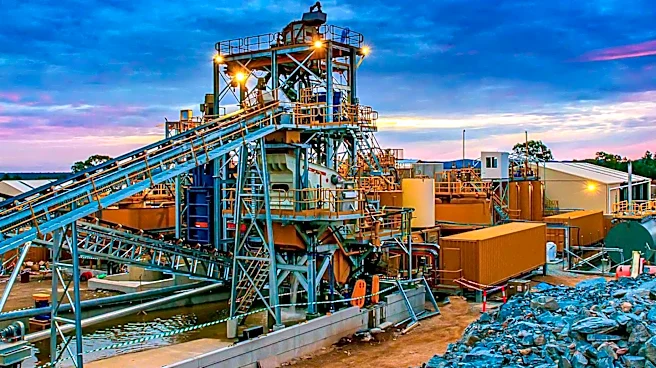
Brazil is positioning itself as a key player in the global supply of critical minerals, which are essential for defense, national security, and advanced technologies. The country holds the second-largest reserves of rare earth elements after China, along
with significant deposits of lithium and niobium. Brazil's strategic minerals are crucial for producing advanced technologies such as communications systems and unmanned platforms. The U.S. Geological Survey highlights Brazil's potential as a reliable alternative supplier to China. However, Brazil faces challenges in transforming its mineral wealth into industrial capability, as it currently exports primarily mineral concentrates. The acquisition of Serra Verde by USA Rare Earth for $2.8 billion exemplifies efforts to shift processing from China to the U.S. Brazil is also enhancing cooperation with the U.S. to diversify supply chains and develop processing capabilities.
Why It's Important?
The development of Brazil's critical minerals sector is significant for global supply chain diversification, particularly in reducing dependence on China. As China dominates the refining and processing of these minerals, Brazil's emergence as an alternative supplier could impact global markets and geopolitical dynamics. The U.S. sees Brazil as a strategic partner in securing access to essential resources for advanced technologies and defense applications. This partnership could lead to increased foreign investment in Brazil's mining sector, boosting its economy and technological capabilities. However, China's expanding presence in Brazil's mining industry poses a strategic challenge, as it could influence supply chains critical to modern economies and national security.
What's Next?
Brazil is working to strengthen its industrial and technological base by integrating extraction activities with innovation and financing. The country is advancing legislation to create a National Policy on Critical and Strategic Minerals, which includes new financing instruments and investment in research and development. However, concerns exist that the proposed legislation could deter foreign investment. Brazil aims to map more of its territory geologically and develop domestic capabilities to maintain sovereignty over its strategic resources. The decisions Brazil makes will influence its economic future and international efforts to build resilient supply chains less dependent on China.
Beyond the Headlines
The strategic importance of Brazil's minerals extends beyond economic gains. The country's ability to develop its industrial base and reduce dependence on foreign technologies is crucial for maintaining national sovereignty. The debate over foreign investment in Brazil's mining sector highlights concerns about control over strategic resources. Brazil's efforts to integrate its mining sector with processing industries and innovation could lead to significant infrastructure development and job creation. The country's approach to managing its mineral wealth will have long-term implications for its role in global supply chains and its ability to attract investment.