

What's Happening?
The United Kingdom has granted the United States permission to use its military bases for defensive strikes on Iranian missile sites. This decision marks a shift in the UK's stance, as it had previously withheld such permission. The bases, including RAF
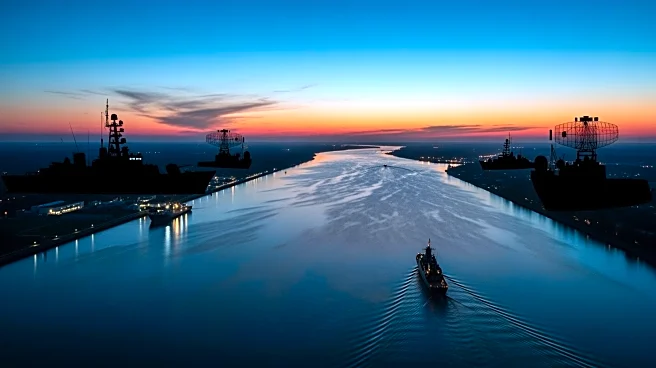
Fairford in Gloucestershire and Diego Garcia in the Indian Ocean, are now authorized for use in operations targeting Iranian sites that threaten the Strait of Hormuz. This development follows criticism from President Trump, who labeled NATO allies as 'cowards' for their lack of action in reopening the critical shipping channel. The Strait of Hormuz is a vital trade route, with approximately 20% of the world's oil passing through it. The decision by the UK comes amid ongoing tensions and military actions involving the US, Israel, and Iran.
Why It's Important?
The UK's decision to allow the US to use its bases for strikes on Iranian sites is significant for several reasons. Firstly, it underscores the strategic importance of the Strait of Hormuz, a crucial artery for global oil supply. Any disruption in this region can have far-reaching implications for global energy markets and economic stability. Secondly, the move highlights the complexities of international alliances and the pressures faced by countries like the UK to balance diplomatic relations with military commitments. The decision may also influence NATO dynamics, as it reflects a willingness to support US-led initiatives despite previous hesitations. Additionally, this action could escalate tensions with Iran, which has warned that such cooperation would be seen as participation in aggression.
What's Next?
The authorization for US strikes from UK bases could lead to increased military activity in the region, potentially heightening tensions with Iran. The international community will likely monitor the situation closely, as any escalation could impact global oil prices and economic stability. The UK may face diplomatic challenges, both domestically and internationally, as it navigates its role in the conflict. Reactions from other NATO members and global powers will be critical in shaping the next steps. The situation may also prompt discussions on energy security and the need for alternative routes or strategies to ensure the uninterrupted flow of oil through the Strait of Hormuz.