






What's Happening?
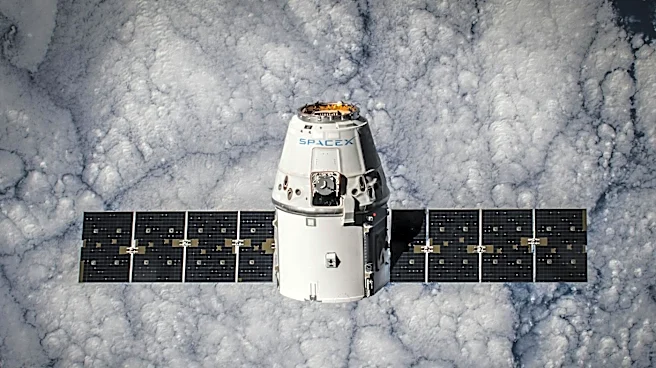
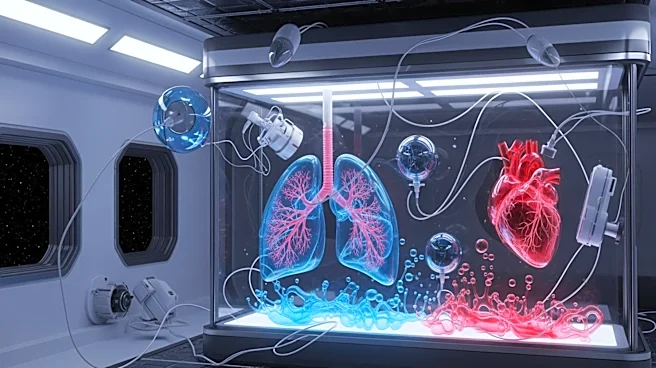
NASA is conducting research aboard the International Space Station (ISS) to study how bacteria that cause pneumonia can lead to long-term heart damage. The research involves observing how stem cell-derived heart tissues respond to bacterial infections
in the unique environment of space. This study is part of the MVP Cell-09 investigation, which aims to uncover new methods for managing cardiovascular health and infectious diseases. In space, bacteria tend to exhibit more severe characteristics and enhanced drug resistance, which researchers are leveraging to better understand cellular responses that are difficult to detect on Earth. The study focuses on the Streptococcus pneumoniae bacteria, a leading cause of community-acquired pneumonia (CAP), which is associated with increased risk of heart disease. The research is crucial for understanding how space-specific factors influence disease progression, which is essential for ensuring human health during long-duration space travel.
Why It's Important?
The research conducted by NASA has significant implications for both space exploration and healthcare on Earth. By understanding how bacterial infections behave in space, scientists can develop better strategies to manage these infections and their long-term effects on the heart. This is particularly important as humans plan for longer missions in space, where maintaining astronaut health is critical. On Earth, the findings could lead to improved treatments for pneumonia and its associated cardiovascular risks, potentially reducing the incidence of heart disease following severe infections. The study also highlights the potential of space-based research to address complex health issues, offering insights that could lead to the development of new drugs and diagnostic tools.
What's Next?
As the research progresses, scientists will continue to analyze the data collected from the ISS experiments to identify specific factors that make bacterial infections more severe in space. This could lead to the identification of new targets for treatment and the development of more effective therapies. The knowledge gained from this study will be crucial for future deep space missions, where understanding and mitigating health risks will be vital for the success and safety of astronauts. Additionally, the research may inspire further studies on other infectious diseases and their impact on human health in space and on Earth.