
What's Happening?
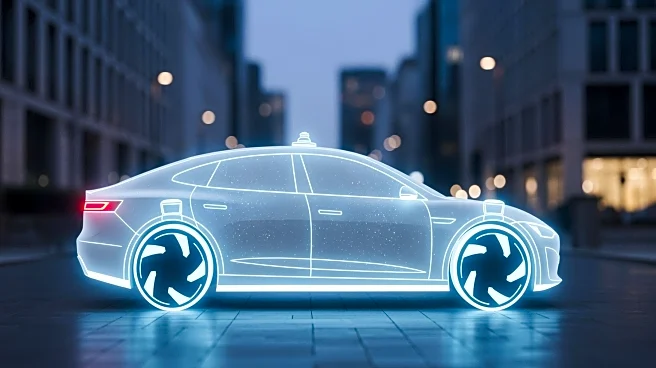
Wayve, a London-based AI company, has introduced the Ford Mustang Mach-E as the first self-driving car to navigate London's complex roadways. Unlike traditional autonomous vehicles that rely heavily on LiDAR
and pre-mapped routes, Wayve's technology uses a camera-led, learning-based AI system. This approach allows the vehicle to adapt to real-time road conditions and unexpected events, such as pedestrians and cyclists. The initiative marks a significant step in autonomous vehicle technology, showcasing the potential for AI-driven navigation in urban environments.
Why It's Important?
The introduction of self-driving cars in London represents a major advancement in autonomous vehicle technology. By using a learning-based AI system, Wayve's approach could revolutionize how autonomous vehicles are integrated into urban settings. This development has implications for traffic management, safety, and the future of urban transportation. If successful, it could lead to broader adoption of autonomous vehicles, reducing traffic congestion and improving road safety. The project also highlights the potential for AI to enhance vehicle navigation without extensive infrastructure changes.
What's Next?
As Wayve continues to test its self-driving technology, the company plans to expand its partnerships with logistics and ride-hailing operators. The UK government is also working on regulatory frameworks to support the commercial deployment of autonomous vehicles. Future steps will involve addressing public trust, insurance, and data ethics to ensure successful integration into everyday life. The outcome of these trials could influence global strategies for autonomous vehicle deployment, setting a precedent for other cities considering similar initiatives.