




What's Happening?
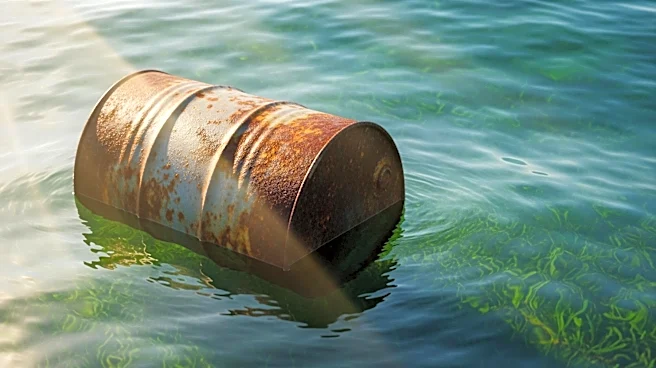
Researchers have discovered barrels on the ocean floor off the coast of Los Angeles, marked by unusual white halos, indicating the presence of highly alkaline substances. These barrels, remnants of industrial waste dumping from the 1930s to the early
1970s, are creating environments where most marine life cannot survive. The study, published in PNAS Nexus, reveals that the alkaline waste is causing chemical reactions that form visible white halos around the barrels. These reactions are altering the chemical conditions of the surrounding sediments, making them inhospitable to most marine organisms. The findings suggest that the waste is acting as a long-term pollutant, with effects persisting for over 50 years.
Why It's Important?
The discovery of these barrels and their impact on marine ecosystems highlights the long-term consequences of industrial waste disposal practices. The presence of alkaline waste, rather than the previously suspected DDT, suggests that the environmental impact may be broader and more complex than initially thought. This situation underscores the need for comprehensive environmental assessments and remediation efforts to address historical pollution. The findings also raise concerns about the potential for similar undiscovered sites and the ongoing impact on marine biodiversity and ecosystem health.
What's Next?
Further research is needed to determine the full extent of the pollution and the number of barrels present on the ocean floor. Scientists are likely to conduct more detailed surveys and analyses to identify the specific chemical compositions of the waste and assess the broader environmental impact. Regulatory agencies may need to consider new policies or initiatives to address and mitigate the effects of historical industrial waste dumping. Additionally, there may be increased pressure on industries to adopt more sustainable waste management practices to prevent future environmental damage.