



What's Happening?
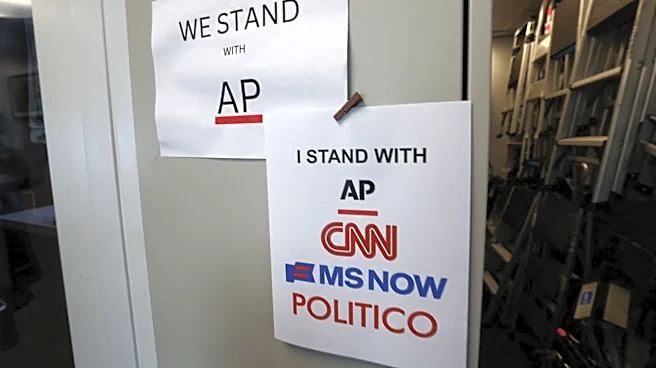
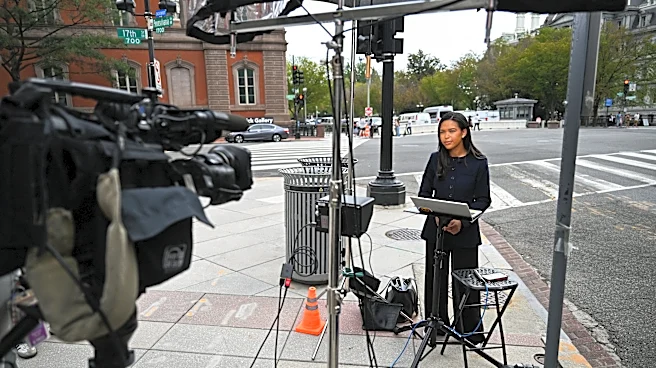
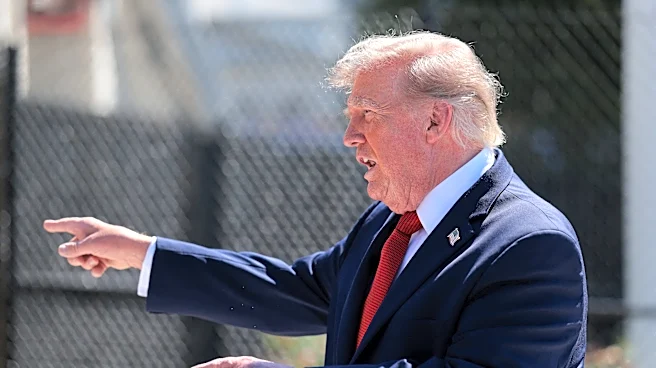
CNN, MS NOW, and Politico have filed a lawsuit against President Trump, Chief of Staff Susie Wiles, Communications Director Steven Cheung, and Secret Service Director Sean Curran, following the revocation of their White House credentials. The lawsuit,
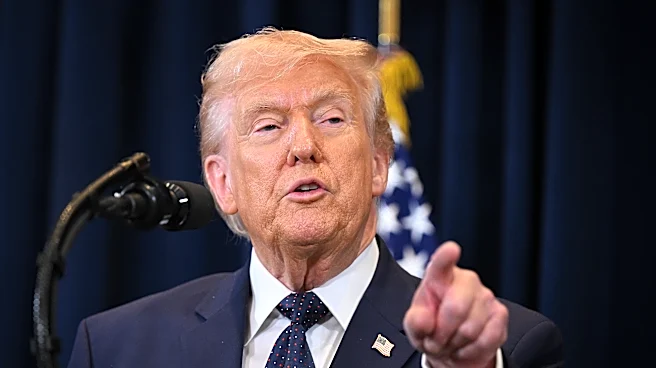
filed in the U.S. District Court for the District of Columbia, alleges that the administration's actions violate the First Amendment. President Trump had previously stated that 'Media Outlets shouldn’t be able to constantly write or report FICTION and LIES' and indicated that more bans were forthcoming, asserting his right to deny access to the 'people’s house' to outlets he deemed to be publishing 'purposely negative stories.' This legal action is being led by Ted Boutrous, Katie Townsend, and Connor Sullivan of Gibson Dunn, who co-chair the firm’s First Amendment and Free Expression practice.
Why It's Important?
This lawsuit is highly significant as it directly challenges the executive branch's power to control access for news organizations based on their reporting. The First Amendment guarantees freedom of the press, and the revocation of White House credentials for specific outlets raises serious concerns about censorship and the government's ability to manipulate media coverage. The case could set a crucial precedent regarding the rights of journalists to access government institutions and officials, particularly in the context of a president who has openly criticized and labeled certain news as 'fake news.' A ruling in favor of the news outlets would reinforce the importance of an independent press in a democratic society, while a ruling against them could embolden future administrations to restrict media access, potentially undermining transparency and accountability. The unified stance of other major news organizations, including Fox News, in refusing to provide replacement camera crews for CNN's pool duty, underscores the broad industry concern over these actions.
What's Next?
The U.S. District Court for the District of Columbia will now hear arguments from both the news outlets and the Trump administration. The legal team from Gibson Dunn, with their prior success in similar cases, will likely argue that the administration's actions constitute an unconstitutional restriction on the press. The administration will likely defend its actions by citing the need to manage access to the White House and its perception of the outlets' reporting. The court's decision will be closely watched, as it could have immediate implications for the access of the involved news organizations and broader ramifications for press freedom in the United States. Depending on the outcome, there could be appeals to higher courts, further shaping the legal landscape for media access to the executive branch.
Beyond the Headlines
This legal battle extends beyond mere access credentials; it delves into the fundamental role of the press in a democracy and the delicate balance of power between the government and the media. The President's rhetoric, labeling critical reporting as 'fake news' and justifying restrictions based on perceived negativity, raises profound questions about the erosion of trust in journalistic institutions and the potential for executive overreach. The case highlights the increasing polarization of media and politics, where the very definition of objective reporting is contested. It also underscores the importance of a robust legal framework to protect the press from arbitrary government actions, ensuring that citizens have access to diverse and independent sources of information. The outcome could influence public perception of media credibility and the future of journalistic practice in an environment where government officials actively seek to control narratives.