






What's Happening?
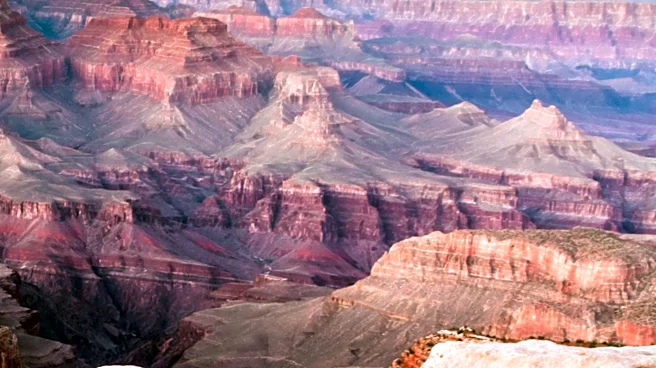
The Arizona Department of Environmental Quality (ADEQ) has approved an increase in the allowable levels of arsenic in a monitoring well at the Pinyon Plain uranium mine near the Grand Canyon. The new limit is set at 55 micrograms per liter, up from 50,
despite the Environmental Protection Agency's standard of 10 micrograms per liter for drinking water. This decision has faced opposition from the Havasupai Tribe and environmental groups, who warn of potential risks to the Grand Canyon's ecosystem and public health. ADEQ maintains that the mine is not adding arsenic to the groundwater, but rather drawing naturally occurring arsenic toward the wells.
Why It's Important?
The decision to raise arsenic limits in the Grand Canyon area has significant environmental and public health implications. The Grand Canyon is a critical natural resource and a major tourist destination, and any potential contamination could have far-reaching effects on the local ecosystem and the health of visitors and residents. The opposition from the Havasupai Tribe and environmental groups highlights the ongoing tensions between resource extraction and environmental conservation. This situation underscores the need for careful management of natural resources and consideration of the long-term impacts of industrial activities.