


What's Happening?
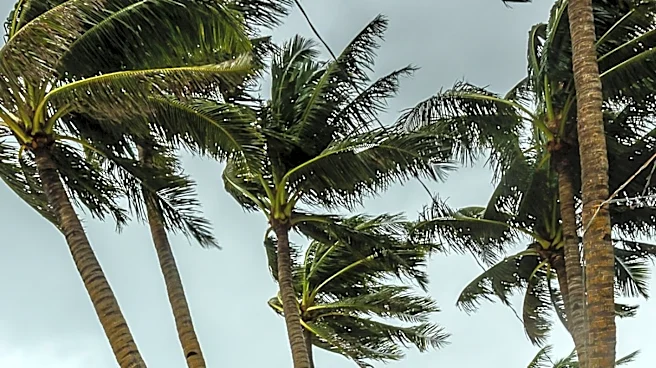
Japan has ordered the evacuation of nearly 260,000 people in the prefectures of Okinawa and Kagoshima as Typhoon Dolphin approaches. The Japan Meteorological Agency reports that the typhoon has maximum sustained winds of 144 km/h, with gusts reaching
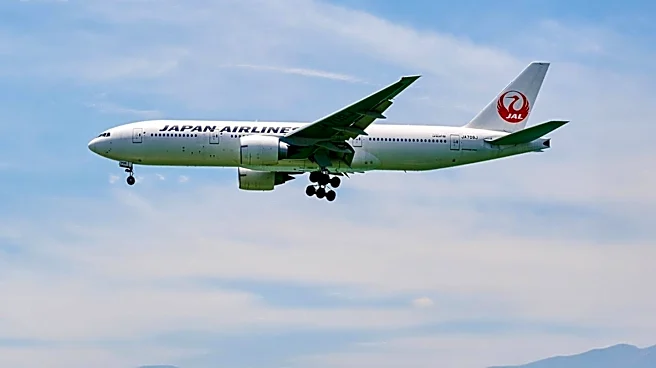
up to 198 km/h. The storm is expected to bring strong winds, heavy rain, and high waves, posing a risk of damage to buildings and potential flooding. Over 500 flights have been canceled, and Toyota has temporarily suspended operations at nine factories in the region. The typhoon is also affecting Kyushu, where residents are still recovering from a recent earthquake.
Why It's Important?
The evacuation and flight cancellations highlight the severe impact of Typhoon Dolphin on Japan's infrastructure and daily life. The storm's approach has disrupted transportation and industrial operations, affecting both local residents and businesses. The potential for structural damage and flooding poses significant risks to public safety and property. The situation underscores the vulnerability of regions prone to natural disasters and the importance of preparedness and timely response to mitigate the impact.
What's Next?
As Typhoon Dolphin continues its path, authorities will monitor its progress and adjust evacuation orders and safety measures as needed. The storm is expected to maintain its intensity, and further disruptions to transportation and business operations are possible. Residents in affected areas are advised to stay informed and follow official guidance to ensure their safety. The response to the typhoon will likely involve coordination between government agencies, emergency services, and local communities to address immediate needs and support recovery efforts.