


What's Happening?
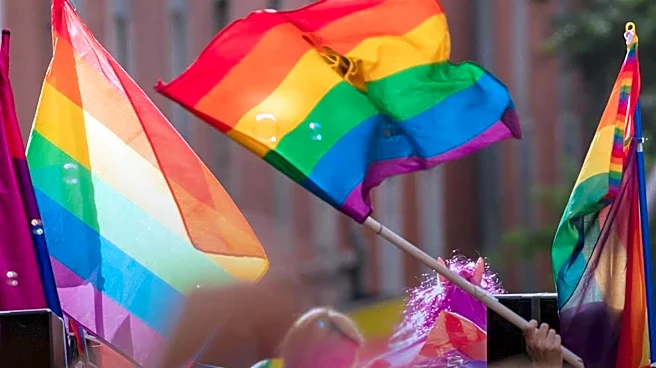
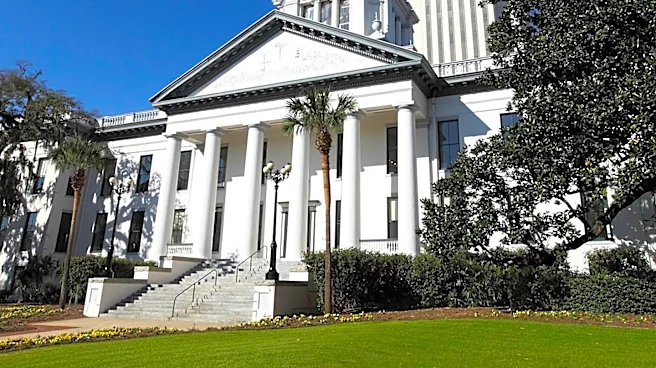
Greater Palm Springs Pride is proceeding with its annual four-day celebration despite a significant $325,000 shortfall in sponsorship funding. According to Ron deHarte, President of Palm Springs Pride, 60% of this deficit stems from a sponsor in Florida
that has withdrawn support due to the governor's directive against Diversity, Equity, and Inclusion (DEI) or related programs. The remaining 40% is attributed to broader economic challenges, leading to tighter budgets for other corporate partners. Despite these financial hurdles, the event, which typically attracts over 200,000 attendees and generates millions in local economic impact, will continue. DeHarte emphasized that the organization views this challenge as a modern tactic of marginalization but remains committed to its mission, highlighting the LGBTQ+ community's historical resilience and self-reliance. The festival aims to be a vibrant and political statement, reinforcing the ongoing fight for equality.
Why It's Important?
This funding shortfall for Palm Springs Pride underscores a growing trend where political climates and economic pressures directly impact LGBTQ+ organizations and their ability to provide essential services. The withdrawal of corporate sponsorship, particularly due to political directives against DEI initiatives, signals a challenging environment for organizations that rely on such funding. This situation could set a precedent for other Pride events and LGBTQ+ non-profits across the U.S., potentially jeopardizing critical services like crisis intervention for homeless youth, HIV/AIDS prevention, legal aid, and safe community spaces. The financial strain can be seen as a form of marginalization, weakening the infrastructure that supports the LGBTQ+ community's advocacy and well-being. The event's decision to proceed despite reduced resources highlights the community's determination but also exposes the vulnerability of such initiatives to external political and economic forces.
What's Next?
Palm Springs Pride will move forward with its celebration from November 6th to November 9th, emphasizing community support and grassroots efforts to bridge the funding gap. Organizers are encouraging individual donations and participation in events like the Equality Walk, as attendance remains free. This shift in funding strategy suggests a potential move towards greater reliance on community-based support rather than corporate sponsorships, which can be volatile. The event is expected to serve as a powerful political statement and a call to action, reinforcing the ongoing struggle for LGBTQ+ rights. The situation may prompt other Pride organizations to re-evaluate their funding models and strengthen community engagement to ensure sustainability in the face of similar challenges. The long-term impact could be a re-centering of Pride events on activism and community care, rather than corporate-sponsored spectacles.
Beyond the Headlines
The funding crisis at Palm Springs Pride reveals deeper implications regarding the intersection of corporate responsibility, political influence, and social justice movements. The withdrawal of sponsorship due to anti-DEI directives highlights how political rhetoric can translate into tangible financial consequences for marginalized communities. This situation also raises questions about the nature of corporate support for Pride events, prompting a discussion on whether such sponsorships are genuine commitments to equality or merely opportunistic branding exercises that can be easily rescinded under pressure. The resilience demonstrated by Palm Springs Pride, by choosing to proceed with fewer resources, underscores the movement's origins in grassroots activism and resistance. It suggests a potential return to a more community-driven, politically charged form of Pride, where the focus is less on celebration and more on advocacy and mutual aid, thereby strengthening the movement's core values and independence from external corporate influence.