


What's Happening?
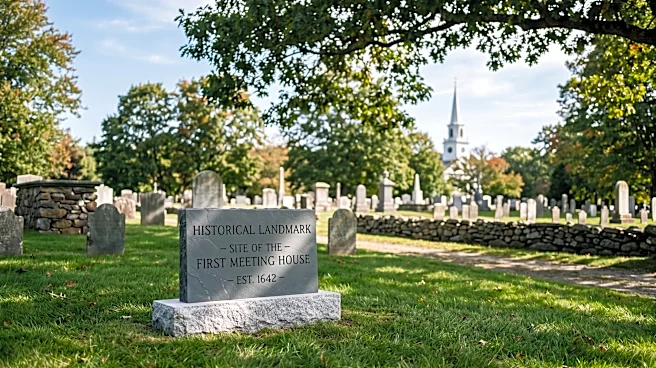
As part of America’s 250th anniversary commemorations, historians are making five stops across Maine this week to honor individuals with direct connections to the Boston Tea Party. One such ceremony took place at Forest Hill Cemetery in Lamoine, Maine,
where a commemorative marker was unveiled for Elkanah Young. Evan O’Brien, Creative Manager at the Boston Tea Party Ships and Museum, stated that Young is being recognized as an eyewitness to history, connected to the December 16, 1773, event. Born in Eastham, Massachusetts, in 1745, Young was buried in Lamoine in 1832. While the exact reasons for his return to Boston in 1773 are not fully known, it is believed he was in port on one of his ships and became involved in the fervor. The ceremony was attended by historians and descendants of Young, including Keith Young of Massachusetts, who has researched Elkanah for many years. Since 2018, The Boston Tea Party Ships and Museum, in partnership with Revolution 250, has been traveling across the U.S. to recognize such historical figures, aiming to highlight lesser-known stories alongside prominent figures like Hancock and Adams. Jonathan Lane, Executive Director of Revolution 250, emphasized the importance of sharing family stories as critical to American history.
Why It's Important?
This recognition event in Lamoine, Maine, is important for several reasons related to U.S. history and cultural preservation. Firstly, it contributes to a more comprehensive understanding of the Boston Tea Party, moving beyond well-known figures to include individuals like Elkanah Young, who played a role in the event. This broader perspective enriches the national narrative of the American Revolution. Secondly, the initiative to place commemorative markers across Maine and other states helps to connect local communities with significant national historical events, fostering a sense of shared heritage and pride. For Maine, specifically, it highlights its historical ties to the foundational events of the United States. Thirdly, the involvement of descendants, such as Keith Young, underscores the enduring personal and familial connections to historical events, making history tangible and relevant to contemporary generations. This effort to preserve and share these stories is crucial for historical education and for maintaining a vibrant national memory, ensuring that the sacrifices and actions of individuals during the nation's formative years are not forgotten. It also promotes historical tourism and local engagement with heritage sites.
What's Next?
The series of commemorative marker ceremonies across Maine will continue, with upcoming events honoring Joseph Boardman in Islesboro and two other individuals in Bowdoin and Portland. These events will further expand the recognition of local figures connected to the Boston Tea Party. The Boston Tea Party Ships and Museum, in partnership with Revolution 250, will likely continue their nationwide initiative to identify and honor other historical figures as part of America's 250th anniversary celebrations. This ongoing effort will involve further historical research, community engagement, and public ceremonies. The increased awareness generated by these events could lead to greater interest in local history, genealogical research, and historical preservation efforts in various communities. Educational institutions may also incorporate these newly highlighted stories into their curricula, providing students with a more nuanced and inclusive understanding of American history. The long-term goal is to ensure that the diverse contributions to the American Revolution are recognized and remembered for future generations.
Beyond the Headlines
The recognition of figures like Elkanah Young goes beyond simply adding names to historical records; it speaks to the democratic nature of historical memory. Often, historical narratives focus on prominent leaders, overlooking the contributions of ordinary citizens whose actions, however small, collectively shaped major events. By honoring individuals like Young, this initiative challenges the traditional, top-down approach to history, promoting a more inclusive and grassroots understanding of the past. It highlights the idea that history is not just made by famous figures but by countless individuals whose lives intersected with pivotal moments. This effort also underscores the power of local history in enriching national narratives, demonstrating how regional stories contribute to the broader tapestry of American identity. Ethically, it is a commitment to historical accuracy and completeness, ensuring that all relevant voices and experiences are acknowledged. Culturally, it reinforces the value of heritage and the importance of connecting with one's ancestral past, fostering a deeper appreciation for the origins of the nation.