






What's Happening?
A study involving real-time brain-controlled selective hearing has shown promising results in enhancing speech perception in environments with multiple talkers. Conducted with participants undergoing epilepsy monitoring, the study utilized intracranial
electrodes to record neural signals, which were then processed to amplify the attended speech. The system demonstrated significant perceptual benefits, with participants preferring the enhanced listening experience. The technology accurately tracked attentional focus, providing a boost in target-to-masker ratio, which improved speech intelligibility and reduced listening effort. The study also explored the system's ability to adapt to attention shifts, both instructed and self-initiated, confirming its potential for real-world applications.
Why It's Important?
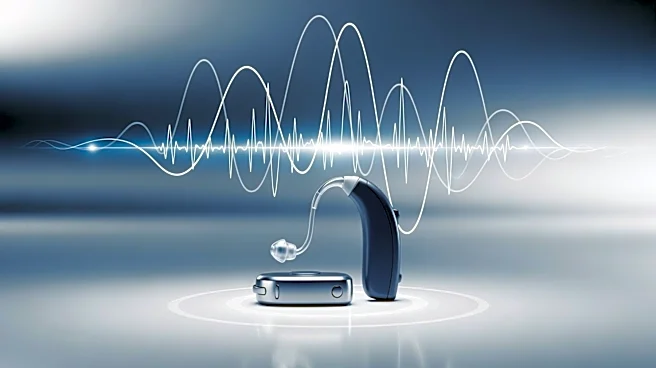
This development is significant as it offers a potential breakthrough for individuals with hearing loss, particularly in challenging auditory environments. By leveraging neural signals to enhance speech perception, the system could improve communication and quality of life for those affected by hearing impairments. The technology's ability to dynamically adjust to attentional shifts without external cues suggests it could be integrated into everyday listening devices, providing a more natural and effective hearing solution. This advancement also highlights the growing intersection of neuroscience and technology, paving the way for innovative approaches to sensory augmentation.
What's Next?
Future research will likely focus on refining the system's accuracy and responsiveness, potentially expanding its application to a broader range of auditory conditions. There may also be efforts to miniaturize the technology for practical use in consumer hearing aids. Additionally, exploring the system's integration with other sensory augmentation technologies could further enhance its utility. Stakeholders, including healthcare providers and technology developers, will be keen to assess the system's commercial viability and potential impact on the hearing aid market.