





What's Happening?
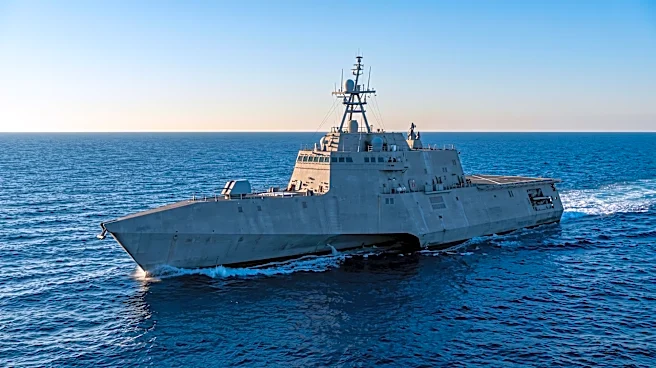
The Trump administration's 'Operation Southern Spear,' a year-long military campaign targeting drug trafficking organizations in Latin America, is facing scrutiny regarding its effectiveness. The operation, which includes airstrikes against alleged drug-carrying
vessels in the Caribbean and Eastern Pacific and occasional deployments of U.S. special operations forces, has resulted in 68 strikes on small boats and over 225 fatalities. Despite claims of success from the White House, analysts from the Drug Enforcement Administration and the Pentagon's own intelligence agency suggest the boat strikes have not significantly reduced the flow of cocaine to the United States. U.S. Customs and Border Protection data indicates a nearly 1% increase in cocaine seizures at the border in the 10 months since the operation began, and retail cocaine prices have remained stable. While the administration points to a 45% drop in fentanyl seizures between 2024 and 2025, experts attribute this success to cooperation with the Mexican government and technology-driven measures at legal points of entry, rather than 'Operation Southern Spear's' maritime activities, as fentanyl is primarily produced in Mexico.
Why It's Important?
The debate over 'Operation Southern Spear's' effectiveness highlights a critical challenge in U.S. counternarcotics policy: the distinction between tactical accomplishments and strategic goals. While the military has conducted numerous strikes and caused fatalities, the continued flow of cocaine and stable market prices suggest that these actions may not be deterring cartels or significantly disrupting their supply chains. This raises questions about the allocation of resources and the overall strategy in the 'war on drugs.' If military strikes primarily force traffickers to find alternative routes rather than reducing overall drug availability, the long-term impact on U.S. communities and public health may be limited. The differing results for cocaine and fentanyl also underscore the need for tailored approaches to combat various illicit substances, recognizing their distinct origins and trafficking methods. The scrutiny of 'Operation Southern Spear' is important for evaluating the efficacy of current U.S. foreign policy and military interventions in Latin America, and for informing future strategies to combat transnational organized crime.
What's Next?
The Trump administration is expected to expand its anti-cartel efforts to land targets in the coming months. U.S. special operations forces are already active in Ecuador, assisting in the fight against gangs, and Colombia's President Abelardo de la Espriella has approved joint operations with U.S. forces against criminal organizations. A U.S. strike in Venezuela in June, which eliminated the head of the Tren de Aragua criminal network, indicates a willingness to engage in direct action against high-value targets. The administration will likely continue to emphasize its commitment to combating drug trafficking and may seek to declare further successes as these land-based operations unfold. However, the ongoing debate about the strategic impact of these interventions will persist, with analysts continuing to assess whether these actions lead to a genuine reduction in drug flow and cartel influence or merely displace criminal activities. The long-term success of these expanded operations will depend on their ability to address the underlying dynamics of drug production and trafficking, rather than just interdicting shipments.
Beyond the Headlines
The ongoing 'war on drugs' and operations like 'Southern Spear' carry significant geopolitical and ethical implications. The designation of Latin American drug trafficking groups as 'foreign terrorist organizations' grants the U.S. unique authorities, potentially expanding the scope of who can be targeted, including individuals only remotely connected to these groups. This broad interpretation raises concerns about due process and the potential for unintended consequences, such as alienating local populations or inadvertently empowering other criminal factions. The focus on military solutions also risks overshadowing the socio-economic factors that contribute to drug production and trafficking, such as poverty and lack of economic alternatives in source countries. A deeper implication is the potential for a perpetual cycle of conflict, where military interventions lead to temporary disruptions but fail to dismantle the fundamental structures of organized crime, ultimately shifting the problem rather than solving it. The long-term stability and sovereignty of Latin American nations could also be affected by sustained U.S. military presence and intervention.