


What's Happening?
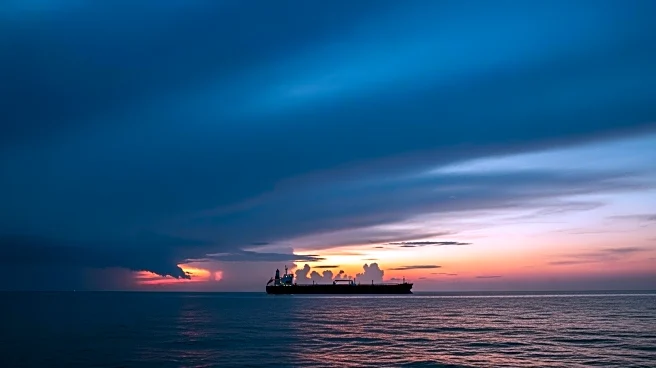
U.S. forces seized an oil tanker off the coast of Venezuela, as announced by President Trump. The tanker, identified as the Skipper, is a Guyana-flagged Very Large Crude Carrier loaded with 1.1 million barrels of oil. The seizure was executed by the FBI,
Homeland Security, and the U.S. Coast Guard, with support from the Pentagon. The tanker has been sanctioned by the U.S. for its involvement in an illicit oil shipping network supporting foreign terrorist organizations. The seizure is part of a broader U.S. strategy to pressure Venezuelan President Nicolás Maduro, with President Trump indicating that Maduro's 'days are numbered.' The U.S. has increased military presence in the Caribbean and conducted strikes against alleged drug trafficking vessels.
Why It's Important?
This action underscores the escalating tensions between the U.S. and Venezuela, highlighting the U.S. government's aggressive stance against the Maduro regime. The seizure of the tanker is a significant move in the U.S.'s efforts to curb illicit oil trade and apply economic pressure on Venezuela. This could impact global oil markets, particularly affecting countries like China that import Venezuelan oil. The move also signals to other shippers the risks of engaging in oil trade with Venezuela, potentially leading to a decrease in Venezuelan oil exports. The U.S.'s actions may further isolate Venezuela economically and politically, while also affecting U.S. relations with countries involved in Venezuelan oil trade.
What's Next?
The U.S. is likely to continue its pressure campaign against Venezuela, potentially leading to further seizures or sanctions. The international community may respond with diplomatic efforts to address the situation, while Venezuela may seek support from allies to counter U.S. actions. The situation could lead to increased volatility in the oil market, with potential implications for global oil prices and supply chains. The U.S.'s approach may also influence its relations with other countries in the region, as well as its broader foreign policy strategy.