



What's Happening?
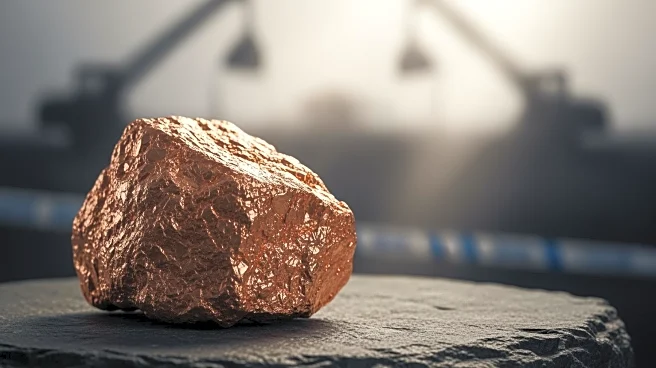
The Democratic Republic of Congo (DRC) is set to export 100,000 metric tons of copper to the United States by the end of January. This copper will be sourced from the Tenke Fungurume Mine, operated by China's CMOC Group Ltd. in partnership with the state-owned
Gécamines SA. The move is part of a broader strategy to enhance economic cooperation and regional security, while also diversifying international partnerships. The DRC has been working to consolidate oversight and assert greater national control over its strategic minerals, which led to a temporary suspension of cobalt exports. Despite this, CMOC continued production and stockpiling, with cobalt prices rebounding significantly. The DRC has also established Gécamines Trading to manage and market minerals from state-backed operations, aiming to strengthen its position in the global raw materials market.
Why It's Important?
This development is significant as it reflects a strategic shift in U.S. trade relations, particularly in securing raw materials from Africa to counter China's influence in critical supply chains. The export of copper from the DRC to the U.S. marks a notable increase in trade, with exports reaching $1.3 billion in the first seven months of 2025. This shift is driven by sustained U.S. demand for African raw materials and changes in global supply chains. The arrangement between CMOC and Gécamines allows the Congolese state to have a 20% stake, enhancing revenue transparency and control over mineral wealth. This could lead to increased economic benefits for the DRC and a stronger geopolitical position.
What's Next?
The DRC's move to export copper to the U.S. is likely to lead to further economic and diplomatic engagements between the two countries. As the DRC continues to assert control over its mineral resources, it may attract more international investment and partnerships. The U.S. may also seek to deepen its engagement with other mineral-rich African countries to secure its supply chains. Additionally, the DRC's strategy to strengthen state participation in mining could lead to more regulatory changes and potential shifts in global mineral markets.