








What's Happening?
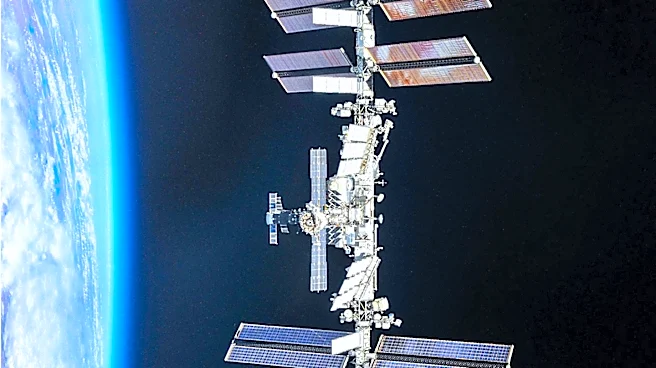
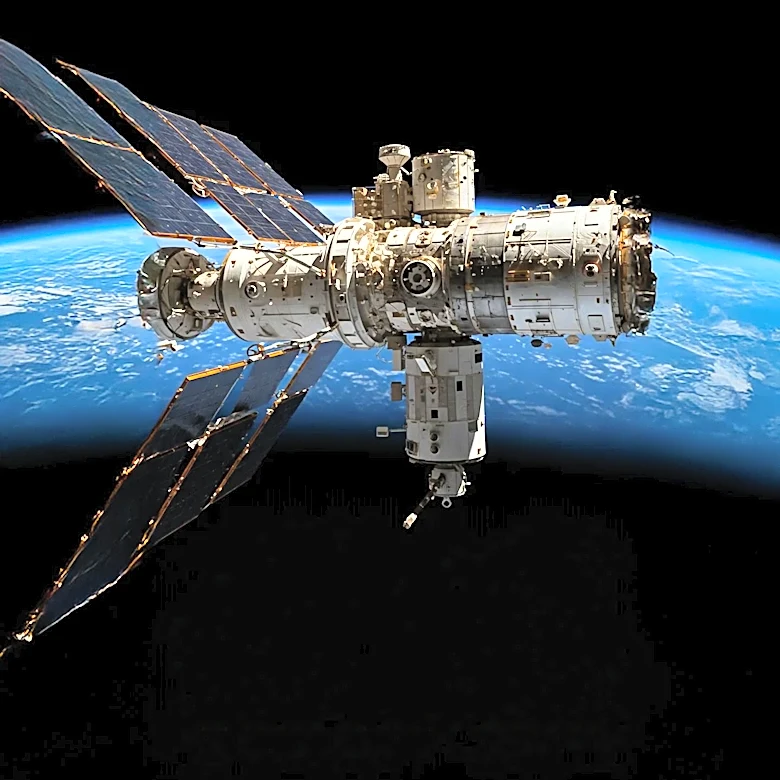
The International Space Station (ISS) concluded a week of scientific research and maintenance activities as it prepares for the arrival of a new crew. NASA flight engineers conducted vein scans and cartilage engineering experiments to study the effects
of space on the human body. The research aims to understand cardiovascular adaptations and improve cartilage formation in microgravity. The ISS crew also prepared for the arrival of three new members, who will launch aboard a Soyuz spacecraft from Kazakhstan. The new crew will join the ISS for an eight-and-a-half-month mission focused on space research. Additionally, the crew tested new cooking equipment and conducted maintenance on the station's cooling and atmospheric systems.
Why It's Important?
The ongoing research and maintenance aboard the ISS are crucial for advancing our understanding of human health in space, which is essential for future long-duration missions to the Moon and Mars. The studies on cardiovascular and cartilage health could lead to improved medical treatments on Earth and enhance astronaut health during space missions. The preparation for the new crew's arrival ensures the continuity of scientific research and international collaboration in space exploration. The ISS serves as a unique laboratory for experiments that cannot be conducted on Earth, contributing to scientific knowledge and technological advancements.
What's Next?
The new crew's arrival will bring fresh perspectives and expertise to the ISS, allowing for the continuation and expansion of research projects. The upcoming mission will focus on various scientific disciplines, including biology, physics, and technology development. The results of these experiments could have significant implications for both space exploration and terrestrial applications. The ISS will continue to serve as a platform for international cooperation, with astronauts from different countries working together to achieve common scientific goals.