
What's Happening?
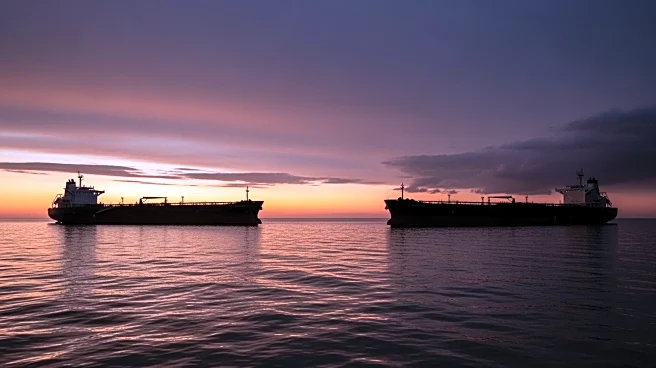
The United States has seized a second oil tanker off the coast of Venezuela, intensifying tensions between the two nations. This action is part of a 'blockade' ordered by President Trump, aimed at preventing
the movement of sanctioned oil. The operation was confirmed by US Homeland Security Secretary Kristi Noem, who stated that the US will continue to target the illicit movement of oil used to fund narco-terrorism. The Venezuelan government has condemned the seizure, labeling it as 'theft and hijacking' and plans to file a complaint with the United Nations. The tanker, believed to be the Panama-flagged Centuries, was intercepted in the Caribbean Sea and was reportedly carrying 1.8 million barrels of Venezuelan crude oil bound for China. This incident follows a similar seizure last week, contributing to a significant drop in Venezuelan crude exports.
Why It's Important?
This development is significant as it highlights the escalating geopolitical tensions between the US and Venezuela, with potential implications for international oil markets and regional stability. The US's aggressive stance could further isolate Venezuela economically, exacerbating the country's ongoing economic crisis. The blockade and seizures could also impact global oil supply chains, particularly affecting countries reliant on Venezuelan oil. Additionally, the US's actions may strain its relations with other countries in the region, as evidenced by the differing reactions from South American leaders. The situation underscores the complex interplay of international law, economic sanctions, and geopolitical strategy.
What's Next?
Venezuela plans to take its grievances to the United Nations and other international bodies, seeking to rally global support against what it perceives as US aggression. The US, under President Trump's directive, is likely to continue its pressure campaign, potentially leading to further military and economic actions. The international community, particularly countries with vested interests in Venezuelan oil, will be closely monitoring the situation. The potential for diplomatic negotiations or further escalation remains uncertain, with regional leaders expressing concern over the possibility of armed conflict.
Beyond the Headlines
The US's actions set a precedent for how international sanctions and maritime law are enforced, raising questions about sovereignty and the legality of such interventions. The situation also reflects broader US foreign policy objectives in Latin America, which some critics argue are reminiscent of historical interventionist strategies. The impact on Venezuela's economy could be severe, potentially leading to increased migration and humanitarian challenges in the region. The incident also highlights the strategic importance of Venezuela's oil reserves and the geopolitical interests they attract.