





What's Happening?
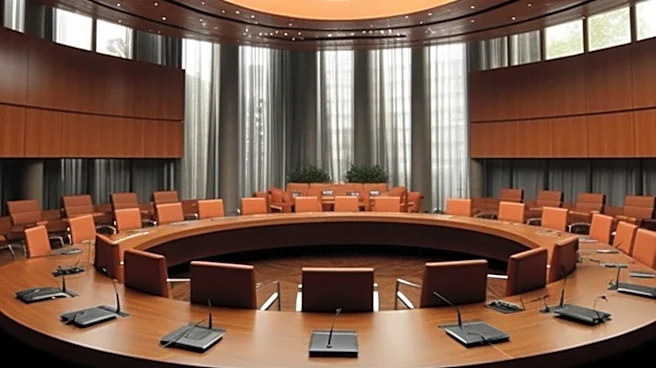
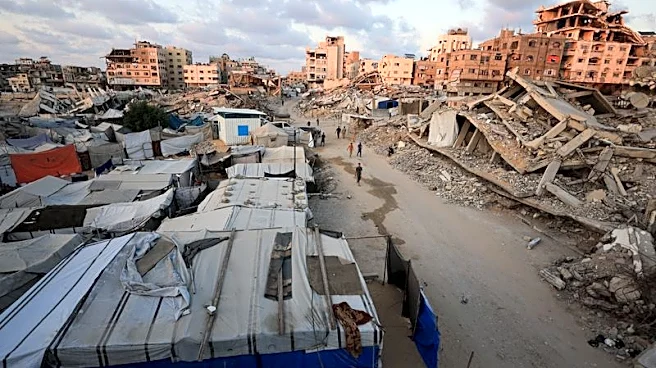
Germany is currently engaged in four days of hearings at the International Court of Justice (ICJ) in The Hague, seeking to dismiss a case brought against it by Nicaragua. Nicaragua accuses Germany of 'facilitating genocide' through its military and financial
support to Israel, particularly in the context of Israel's offensive in Gaza. The case, initiated in 2024, initially saw Nicaragua request emergency measures to compel Berlin to halt all aid, especially military equipment, to Israel. While the ICJ rejected this initial request in April 2024, stating that the circumstances did not justify emergency orders, the broader case remains active. Germany is now presenting 'preliminary objections to the jurisdiction of the Court and to the admissibility of certain claims' made by Nicaragua, aiming to have the case thrown out entirely. Nicaragua has countered, asserting that Germany appears unable to distinguish between self-defense and genocide, while Germany vehemently denies breaching the 1948 UN Genocide Convention and labels Nicaragua's case as 'grossly biased.'
Why It's Important?
This case carries significant international legal and political implications, particularly for the U.S. and its allies. The outcome could set a precedent for how international law interprets the responsibilities of states providing aid to countries involved in conflicts, especially when allegations of genocide are raised. For the U.S., a key ally of Israel, a ruling against Germany could intensify scrutiny on its own military and financial support to Israel, potentially leading to similar legal challenges or increased diplomatic pressure. It also highlights the growing trend of nations using international courts to address perceived violations of international law, even against powerful states. The case underscores the complex ethical and legal dilemmas faced by countries balancing geopolitical alliances with humanitarian concerns and international legal obligations. A decision in favor of Nicaragua could embolden other nations to pursue similar legal avenues, potentially reshaping international relations and the enforcement of human rights conventions.
What's Next?
Following Germany's presentation, Nicaragua will have an opportunity to respond, with both countries receiving additional chances to address the court later in the week. The ICJ typically takes approximately six months to issue a ruling in such cases. The court has two primary paths: it could side with Germany and dismiss the case entirely, or it could rule against Berlin, which would then lead to a more detailed consideration of the case 'on the merits.' Regardless of the immediate outcome, the proceedings are likely to continue to fuel international debate regarding the responsibilities of states in armed conflicts and the interpretation of the UN Genocide Convention. The decision will be closely watched by international legal bodies, human rights organizations, and governments worldwide, as it could influence future diplomatic and legal strategies concerning conflicts and humanitarian crises.
Beyond the Headlines
The legal battle at the ICJ transcends the immediate dispute between Germany and Nicaragua, touching upon deeper ethical and historical dimensions. Germany's foreign policy, deeply influenced by its Nazi past, places Israel's security 'at the core' of its international relations. This historical context adds a layer of complexity to the accusations of 'facilitating genocide,' making the case particularly sensitive for Berlin. The proceedings also highlight the limitations and strengths of international law; while ICJ rulings are binding, the court lacks direct enforcement mechanisms, as demonstrated by Russia's disregard for its order to cease the invasion of Ukraine. This case could further expose the tension between national sovereignty, historical obligations, and the evolving interpretations of international humanitarian law. It also brings into focus the role of smaller nations like Nicaragua in challenging the actions of larger, more influential states on the global stage, potentially inspiring other countries to leverage international legal frameworks for accountability.