



What's Happening?
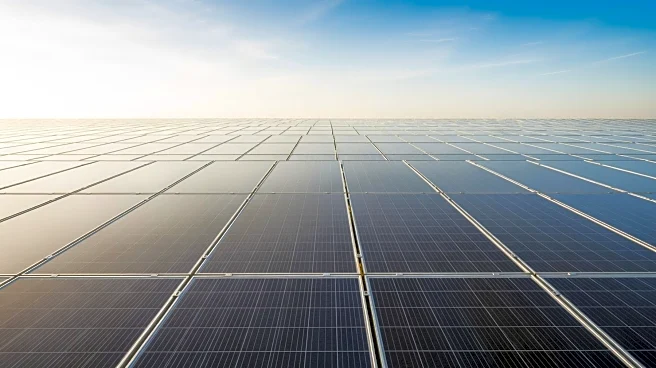
Poland is projected to achieve a cumulative solar capacity of 59.1 GW by 2035, according to GlobalData, a UK consulting firm. The country is expected to add 3.7 GW of solar power in 2025, increasing its total capacity to 24.9 GW. This growth trajectory
is anticipated to continue with similar annual additions through 2028, before slightly decreasing in the early 2030s. By 2035, solar energy is expected to account for nearly 65% of Poland's renewable energy mix, which is projected to reach 91.5 GW. The expansion is driven by utility-scale projects, distributed generation, and auction-based support mechanisms under Poland's Renewable Energy Sources Act. Investments by Polskie Sieci Elektroenergetyczne S.A., the state-owned transmission system operator, are crucial for integrating higher volumes of variable generation into the power system.
Why It's Important?
The significant increase in solar capacity is pivotal for Poland's energy transition, reducing reliance on coal and enhancing energy security. As coal-based generation is expected to decline from 32.2 GW in 2024 to 20.5 GW by 2035, solar and wind energy will play a crucial role in diversifying Poland's energy mix. This shift supports Poland's long-term decarbonization goals and aligns with global efforts to combat climate change. The transition to renewable energy sources not only strengthens Poland's energy independence but also positions the country as a leader in renewable energy within Europe.
What's Next?
Poland's energy sector is likely to see continued investment in renewable infrastructure and technology to support the integration of solar and wind power. The government may introduce further policies to incentivize renewable energy adoption and ensure a stable transition from coal. Stakeholders, including energy companies and policymakers, will need to collaborate to address challenges related to grid integration and energy storage. The success of Poland's renewable energy strategy could serve as a model for other countries seeking to transition to sustainable energy systems.
Beyond the Headlines
The shift towards renewable energy in Poland may have broader implications for the European energy market, potentially influencing energy prices and cross-border energy trade. The transition also raises questions about the socio-economic impact on communities dependent on coal mining and related industries. Efforts to retrain and support workers in these sectors will be essential to ensure a just transition. Additionally, Poland's commitment to renewable energy could enhance its geopolitical standing by reducing energy dependence on external sources.