






What's Happening?
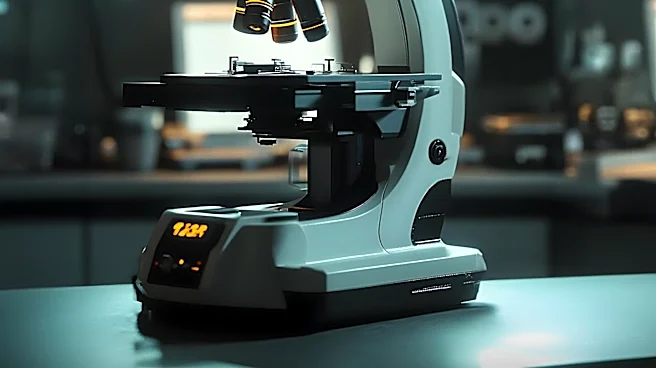
Waters Corporation has announced that the BD BACTEC FXI Culture System has received 510(k) clearance from the U.S. Food and Drug Administration (FDA). This clearance allows the system to be commercialized in the United States, offering laboratories a fully
automated blood culture system designed to improve the speed, consistency, and accuracy of diagnosing sepsis and bloodstream infections. The BD BACTEC FXI Culture System reduces the mean time to detection by approximately three hours compared to its predecessor, enabling earlier pathogen identification and more timely targeted antimicrobial therapy. This advancement is crucial as each hour of delayed sepsis treatment can significantly increase mortality rates. The system features an automated gravimetric measurement of blood culture vial volume, reducing pre-analytical variability and supporting consistent diagnostics.
Why It's Important?
The FDA clearance of the BD BACTEC FXI Culture System is significant for the healthcare industry, particularly in the field of microbiology and infectious disease diagnostics. By reducing the time to detect bloodstream infections, the system can potentially save lives by allowing for quicker medical interventions. This is particularly important in acute care settings where timely treatment is critical. The system's ability to automate and streamline the diagnostic process can also enhance laboratory efficiency, reduce manual intervention, and increase walk-away time for laboratory staff. This innovation reflects a broader trend in healthcare towards automation and precision diagnostics, which can lead to better patient outcomes and more efficient use of healthcare resources.
What's Next?
With the FDA clearance, the BD BACTEC FXI Culture System is set to be introduced to the U.S. market, where it will be available to high-throughput microbiology laboratories. The system's introduction is expected to prompt healthcare facilities to adopt this advanced technology to improve their diagnostic capabilities. As the system becomes more widely used, it may lead to further innovations in automated diagnostic tools and influence the development of new guidelines for the management of sepsis and bloodstream infections. Additionally, the system's success in the U.S. market could pave the way for its adoption in other regions, further expanding its impact on global healthcare practices.