





What's Happening?
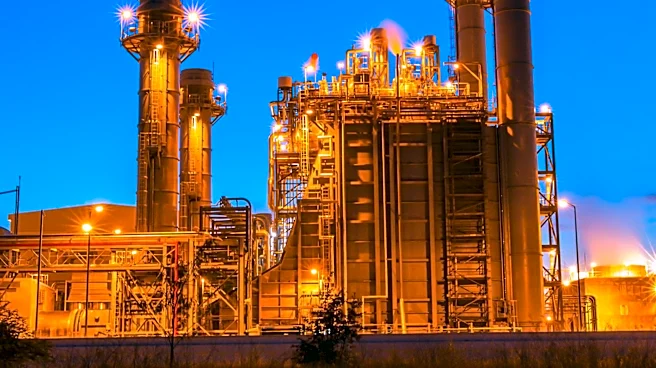
New data from the federal Energy Information Administration (EIA) indicates a significant increase in proposals for grid-connected natural gas power plants across the United States. Since early 2023, these proposals have nearly tripled, and they have risen
by almost half in the last eight months alone. This surge is primarily attributed to the rapidly growing electricity demand from data centers. In contrast, planned additions of solar power have stalled, and wind power additions have dramatically fallen. The EIA's filings for plant additions starting in August 2026 include plans for 60.4 gigawatts (GW) of additional gas capacity by the end of 2030, a 44% increase from the 41.8 GW forecast in December 2025. This marks a reversal from previous trends towards a cleaner grid. Texas leads this natural gas buildout with 20 GW of planned new capacity, accounting for nearly a third of all proposed new grid-connected gas plant capacity through 2030. Louisiana follows with 6.6 GW, Pennsylvania with 4.4 GW, Oklahoma with 3.0 GW, and Mississippi with 2.6 GW, collectively representing 61% of all planned gas capacity additions.
Why It's Important?
This surge in natural gas power plant proposals, driven by data center demand, has profound implications for the U.S. energy landscape, environmental goals, and public health. The construction of these facilities, with typical lifespans of 25 to 30 years, could lock in carbon emissions for decades, hindering efforts to combat climate change. The environmental impacts extend beyond host states, as burning natural gas releases nitrogen oxides and particulate matter, contributing to ozone smog and harming human health. Methane leaks from natural gas production and transportation also significantly contribute to climate change. The shift away from renewable energy sources like wind and solar, which are not keeping pace with data center growth, represents a critical challenge to the nation's clean energy transition. This trend could lead to increased air and water pollution, posing health risks to communities and potentially undermining long-term sustainability objectives. The economic implications include significant investments in fossil fuel infrastructure, which could divert resources from renewable energy development.
What's Next?
The continued acceleration of data center development is expected to further intensify the demand for electricity, likely leading to more proposals for natural gas power plants unless alternative energy solutions are rapidly scaled. The environmental and public health concerns raised by this trend will likely prompt increased scrutiny from environmental groups, policymakers, and affected communities. There may be calls for moratoriums on data center construction or stricter regulations on their energy sources. Policymakers will face pressure to balance economic growth and technological advancement with climate goals and public health. The disparity between the growth of natural gas capacity and the stagnation or decline of renewable energy additions suggests a need for policy interventions to incentivize clean energy development for data centers. The debate will continue on whether the U.S. will commit to decades of fossil fuel reliance or pursue a cleaner, more sustainable path for powering its digital infrastructure.
Beyond the Headlines
The phenomenon of data centers driving a surge in fossil fuel power plants reveals a deeper tension between technological progress and environmental sustainability. While data centers are crucial for the digital economy and artificial intelligence, their immense energy consumption poses a significant challenge to climate goals. This situation highlights the 'hidden' environmental cost of digital services, often overlooked in daily use. The concentration of new gas plants in specific states also raises issues of environmental justice, as these communities may bear a disproportionate burden of pollution. The reliance on natural gas, despite its climate impacts, points to the perceived need for reliable, dispatchable power for continuous AI workloads. This trend calls for innovative solutions in energy storage, grid management, and renewable energy integration to decouple digital growth from fossil fuel dependence. It also prompts a re-evaluation of how energy-intensive industries are sited and regulated, emphasizing the need for a holistic approach that considers both economic benefits and long-term environmental and social costs.