





What's Happening?
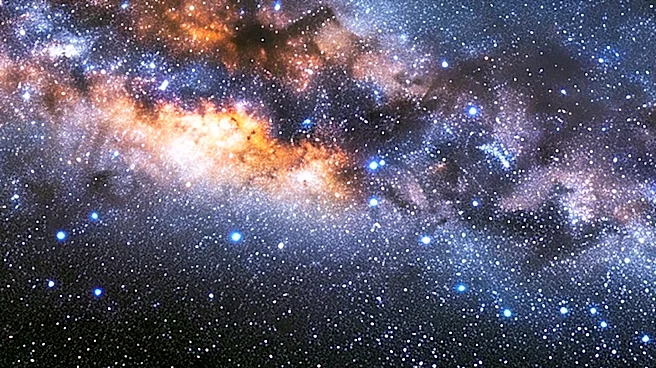
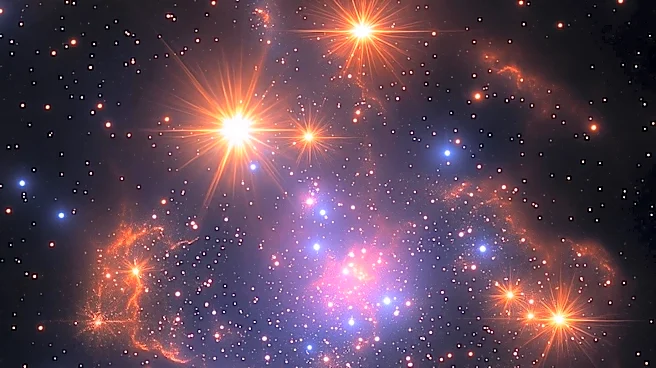
On July 6, 2026, astronomy enthusiasts have the opportunity to observe the Coma Star Cluster, also known as Melotte 111, which will be visible for several hours after sunset. This open cluster, located in the constellation Coma Berenices, is best viewed
with binoculars or a small telescope. The cluster is situated near the yellowish star Gamma Comae Berenices and spans 4 degrees in the sky. The Moon will also pass 5 degrees north of Neptune at 11 P.M. EDT, providing a chance to view both celestial bodies in the early morning sky. Saturn will be visible to the naked eye, while Neptune requires optical aid.
Why It's Important?
The visibility of the Coma Star Cluster offers a unique opportunity for both amateur and professional astronomers to observe a significant celestial event. Such events foster public interest in astronomy and provide educational opportunities for those interested in the night sky. The alignment of the Moon, Saturn, and Neptune also allows for a rare viewing experience, highlighting the dynamic nature of our solar system. These events can inspire future generations to pursue studies in astronomy and related sciences.
What's Next?
Astronomy enthusiasts are encouraged to prepare their equipment and find optimal viewing locations to take advantage of this celestial event. As the Moon continues its orbit, it will provide further opportunities to observe its interactions with other planets. Stargazers should also look forward to upcoming celestial events throughout the month, including the visibility of Venus and Jupiter in the evening sky.