






What's Happening?
President Trump's border czar, Tom Homan, announced that the Immigration and Customs Enforcement (ICE) is conducting an internal review of an officer's vetting process following a fatal shooting in Maine. The officer, involved in the shooting of Johan
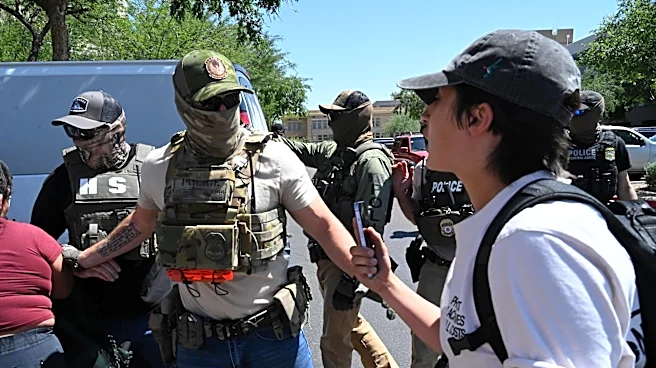
Sebastián Durán Guerrero, a Colombian national, reportedly has a history of mental health struggles and violent behavior. This incident has raised questions about the Department of Homeland Security's (DHS) hiring and training practices, especially as the Trump administration pushes for increased deportations. In response, ICE has mandated the use of body-worn cameras during vehicle stops to ensure transparency and accountability. The review aims to address concerns about the officer's suitability for duty and the broader implications of ICE's enforcement tactics.
Why It's Important?
The review of ICE's vetting and training processes is significant as it addresses public concerns about the agency's enforcement methods and the potential for excessive use of force. The incident in Maine, along with other fatal encounters involving ICE officers, has sparked national debate over the agency's role and the Trump administration's immigration policies. The use of body-worn cameras is a step towards increasing accountability and transparency, which may help restore public trust in ICE operations. However, the situation also highlights the challenges faced by DHS in balancing the need for effective immigration enforcement with the protection of civil liberties and human rights. The outcome of the review could lead to policy changes that impact how ICE officers are trained and monitored.
What's Next?
As the internal review progresses, ICE and DHS may face increased scrutiny from lawmakers and civil rights organizations. The findings could prompt calls for reforms in ICE's hiring and training practices, as well as broader discussions about the agency's role in immigration enforcement. Lawmakers, particularly those on the House Homeland Security Committee, are likely to push for more oversight and accountability measures. The situation may also influence future legislative efforts to address immigration policy and enforcement practices. Additionally, the use of body-worn cameras could become a standard requirement for all ICE operations, potentially setting a precedent for other law enforcement agencies.