





What's Happening?
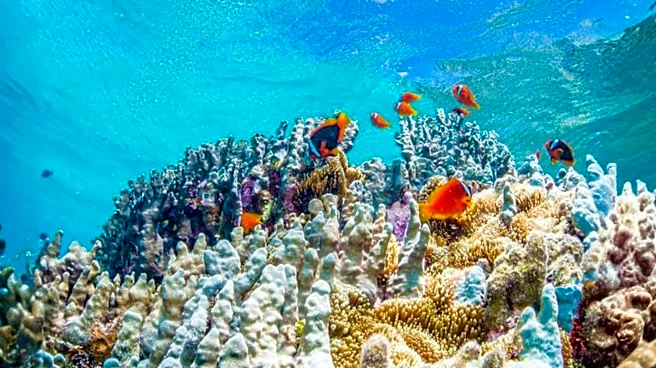
Hawaii's coral reef restoration efforts are struggling to address widespread damage caused by recent severe storms and hurricanes, according to Julia Rose, coral restoration program manager at The Nature Conservancy. Surveys conducted in the field reveal
massive coral colonies, some as large as cars, have broken off and pulverized surrounding reef areas, turning them into rubble. Additionally, many broken coral colonies are still surviving but require reattachment to the substrate to ensure their long-term survival. Hawaii is the first state to insure its reefs, and the recent storms have triggered two payouts from this policy. Despite this financial support, the sheer scale of the damage far exceeds the capacity of responding organizations to fully address it.
Why It's Important?
The struggle to restore Hawaii's coral reefs has significant environmental and economic implications for the U.S. The reefs are vital ecosystems that protect coastlines from erosion, support diverse marine life, and contribute substantially to the state's tourism industry. Their degradation can lead to increased coastal vulnerability, loss of biodiversity, and economic downturns for communities reliant on healthy marine environments. The limited capacity to address the extensive damage, even with insurance payouts, highlights the growing challenges posed by more frequent and intense weather events, likely exacerbated by warming oceans and pollution. This situation underscores the need for more robust and scalable conservation strategies to protect these critical natural assets.
What's Next?
Restoration teams, including those from The Nature Conservancy, are focusing their efforts on corals that are large enough to be reproductive but small enough to be feasibly handled for reattachment. This strategic approach aims to maximize the impact of their limited resources. The ongoing work involves reattaching broken coral colonies to the reef with cement, a labor-intensive process. However, given the vast extent of the damage, only a small fraction of the affected reefs can be addressed. Future efforts will likely involve continued monitoring of reef health, further development of restoration techniques, and potentially seeking additional funding and resources to scale up conservation initiatives in the face of ongoing environmental stressors.
Beyond the Headlines
The challenges faced by Hawaii's reef restoration efforts extend beyond immediate storm recovery, touching upon broader issues of climate change, ocean health, and the long-term resilience of natural ecosystems. While storms have always impacted reefs, the current context of warming oceans, pollution, and overuse significantly diminishes their natural ability to recover. This situation highlights the interconnectedness of global environmental issues and local ecological impacts. The insurance policy for reefs, while innovative, also reveals the limitations of financial instruments in fully mitigating ecological disasters. It prompts a deeper consideration of how human activities contribute to environmental degradation and the ethical responsibility to protect and restore these invaluable natural resources for future generations.