


What's Happening?
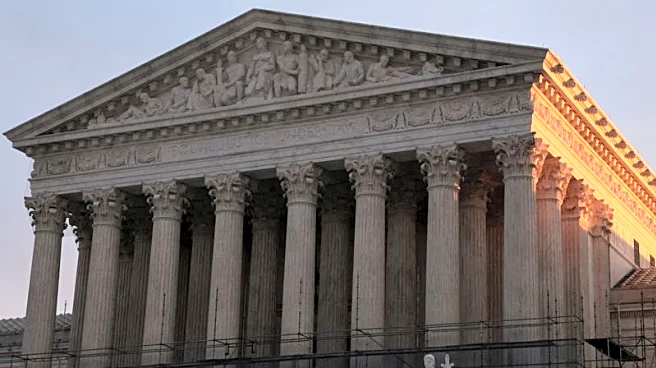
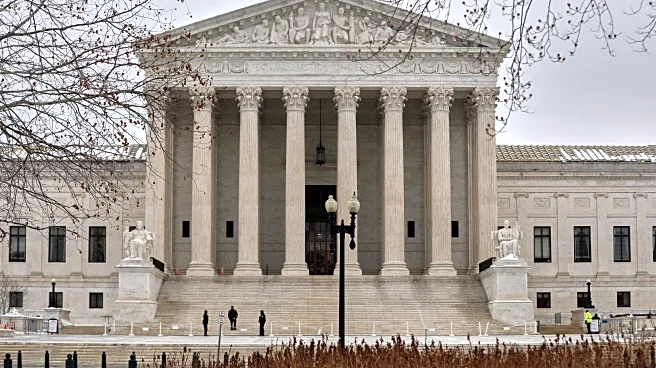
Justice Ketanji Brown Jackson has publicly criticized the Supreme Court's frequent use of the emergency docket to issue rulings that temporarily uphold controversial policies, particularly those from President Trump's administration. Speaking at an event,
Jackson expressed concern that the court's willingness to engage with emergency cases undermines its role and the country's legal framework. She highlighted that the court's decisions often allow new policies to take effect before their legality is fully assessed. Jackson's comments were made during a discussion with Justice Brett Kavanaugh, who defended the court's actions by noting similar treatment of policies from both the Trump and Biden administrations.
Why It's Important?
Jackson's critique brings attention to the growing use of the Supreme Court's emergency docket, which has significant implications for how quickly and under what circumstances policies can be implemented. The emergency docket allows for expedited decisions without full briefings or oral arguments, raising concerns about transparency and the thoroughness of judicial review. This practice has been particularly contentious in cases involving significant policy shifts, such as military and education reforms. Jackson's remarks may fuel ongoing debates about the balance between judicial efficiency and comprehensive legal scrutiny.
What's Next?
The discussion around the emergency docket is likely to continue, with potential calls for reforms to ensure more transparent and deliberate judicial processes. Legal scholars and policymakers may explore ways to address the concerns raised by Jackson and others about the court's role in shaping policy through expedited decisions. The Supreme Court's approach to emergency cases will remain a focal point in discussions about judicial accountability and the separation of powers.